
A weekend papal mass to be broadcast in Minsk's Catholic cathedral could help improve Belarus's standing in the world and eventually lead to a visit by Pope Benedict, the country's top Catholic cleric said.
Saturday's mass, organised with the help of state television, is the first such event in ex-Soviet Belarus, where Catholics make up about 14 per cent of its 10 million people. Belarus is accused by Western countries of infringing human rights and its president, Alexander Lukashenko, is barred from the United States and the European Union. But religious strife is rare and both Catholic and Orthodox holidays are officially observed.
"This will be the first such broadcast in Minsk and we have encountered no obstacles from authorities in organising it," Tadeusz Kondrusiewicz, Archbishop of Minsk-Mogilyov, said in an interview late on Tuesday.
"It is important for the Catholic Church, for young Catholics, to have the opportunity to pray together with the Pope. And I believe it is also important for Belarus itself, to improve Belarus's standing in the world."
Kondrusiewicz, previously the senior Catholic cleric in neighbouring Russia, said the late Pope John Paul had visited many ex-Soviet states and had long wanted to come to Belarus.
"We would love to have the Pope come to Belarus. This would be a landmark event. But for the moment, this is not on the agenda," he said.
PAPAL VISIT
Relations between Rome and the 220 million-strong Orthodox Church, divided since the Great Schism of 1054, became more tense under John Paul, who was unable to visit Russia, the long-held dream of his papacy.
Russian Orthodox patriarch Alexiy II had rejected a visit by Pope John Paul on the grounds that Catholics had tried to poach congregations and claim property in former Soviet republics, particularly Ukraine.
Kodrusiewicz said he hoped the Catholic Church would be able to sign an agreement with Belarussian authorities guaranteeing its rights as a recognised religion akin to one already setting down the leading role for Belarus's Orthodox Church.
"We would be very pleased to sign such an agreement and this ought to happen. Catholics make up the second largest confession in Belarus," he said, adding that in future the Church hoped no longer to have to rely on foreign clergy in parishes.
Authorities have expressed disquiet that half the 398 Catholic clergy in Belarus come from outside the country.
Most are from neighbouring Poland, which has uneasy ties with Minsk over a series of diplomatic and spying rows and allegations that Belarus mistreats its 400,000-strong Polish minority.
But he said Catholics would never engage in proselytising or take actions that would antagonise Orthodox believers.
"There is no logic in this. The Catholic Church sees the Orthodox Church as a sister church," he said.
"There are so many mixed marriages and that can only be beneficial. Benedict has called mixed marriages a laboratory for Christian unity so Belarus can be a nationwide laboratory."




-
Christian nationalists 'are neither patriots nor Christians', says Church of England's parliamentary rep
-

Many Christians among the missing and dead after Nepal floods
-

Church vows to plough on with Project Spire
-

James Orr stands down as adviser to Reform after donations sting
-

Hundreds of churches prepare to welcome Franklin Graham’s ‘God Loves You Tour’ to Manchester
-

MPs vote against assisted suicide in 'victory for hope, compassion and life'
Most Popular
News

AI could become a ‘very dangerous master’, warns John Lennox
Apologist and Oxford mathematician John Lennox warned Christians that artificial intelligence could contribute to a generation becoming increasingly disconnected from Scripture and cautioned that technology meant to serve humanity can become a “very dangerous master.”
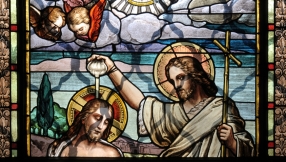
Catholic baptisms fall sharply across Ireland as births decline and secularisation grows
The number of Catholic baptisms taking place across the whole island of Ireland has fallen by almost 30% over the past decade, with declining birth rates and the growth of religious non-affiliation identified as the main reasons.
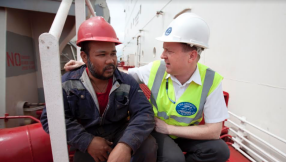
Against backdrop of conflict and tough working conditions, seafarer happiness falls
Seafarer wellbeing has declined for the second consecutive quarter as heavy workloads, restricted shore leave and concerns over pay increasingly weigh on crews, according to new research from The Mission to Seafarers.
When Eastern Europe appeared to be going Protestant
The crucial question is: why did so much of the early Protestant advance subsequently disappear?