New reports suggest that Islamist militants have been responsible for the deaths of at least 200 civilians in north-eastern Nigeria in the last week.
Original estimates indicated that 106 were killed in the Christian village of Izghe near the border of Cameroon in an attack on Saturday when armed men attacked the rural community, slaughtering dozens of innocent people and forcing many others to flee. The death toll has now increased to at least 121.
The attackers are thought to be members of Boko Haram, an Islamic extremist group with ties to al-Qaeda that has declared an intention to cleanse the country of Christians, eradicate Nigerian democracy, and replace it with an Islamic state guided by Sharia law.
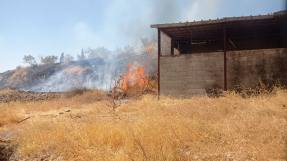
They also detonated bombs and set fire to homes in the attack.
The gunmen arrived at night-time in pick-up trucks and on motorcycles, chanting "Allah Akbar" meaning "God is great". They ordered villagers to gather together before opening fire on those present and slitting the throats of any who attempted to escape.
Local reports suggest that Boko Haram members also carried out similar attacks in other villages on the same day, including Bitiku, Dagu, Kirchang, Kwambula, Yazza and Yinagu. It is as yet unclear how many were killed in these attacks, though a survivor from the village of Yazza reported counting at least 25 corpses before he was able to escape.
Boko Haram has caused over two thousand deaths in Nigeria since 2009, and has recently been particularly active in targeting rural communities. On 26 January, at least 138 civilians were murdered in two attacks in the north-eastern region of Nigeria, with many more injured and suffering terrible burns as militants set fire to homes.
On 11 February, gunmen attacked Konduga in Borno State, killing 62 people and taking 20 young women hostage.
President Goodluck Jonathan declared a state of emergency in Muslim-majority Adamawa, Borno and Yobe states in May 2013 and has authorised an increased military presence to tackle the ongoing violence. Many members of Boko Haram, however, have retreated to bordering Cameroon.
Last week, the Nigerian Air Force began bombing the Sambisa Forest on the border in an effort to force members of the extremist sect out, killing a number of militants and costing at least nine soldiers their lives.
Chief Executive of Christian Solidarity Worldwide Mervyn Thomas has urged the international community to increase its efforts to help the Nigerian government put an end to the violence.
"Nigeria is a strategic nation. Thus it is vital that members of the international community render every possible assistance to enable the country to counter this growing threat to peace and security in the region," he said.
"It is also important for neighbouring states to assist by reinforcing security on their borders and deny Boko Haram a hiding place as a matter of urgency."
In addition, Thomas has called upon the Nigerian government itself to further increase military presence in key areas.
"We echo local calls for a surge in numbers in order to stem the sect's violent campaign in rural areas, which remain soft targets," he said.
William Stark, regional manager for Africa at International Christian Concern, a US-based religious freedom group, has also expressed concern over the lack of action on the part of the Nigerian and US governments.
Despite officially designating Boko Haram a Foreign Terrorist Organisation in 2013, he says the US is not doing enough to end the campaign of terror and warned that the situation could worsen.
"The Nigerian government continues to fail to protect Christian villages and has allowed hundreds of Christians to be killed in 2014 already," he added.
"More decisive action must be taken to end the bloodshed. If action is not taken, the slaughter of Christians in northern Nigeria could reach genocidal levels in the near future."