
Christian Research has commissioned Retail Maxim to begin a new "mystery worshipper" initiative designed to find the reasons why people do not go to Church or practise the Christian faith.
Under the initiative non-Christians will be paid £30 a time to go to a church and evaluate it. The "mystery worshippers" will judge churches on the sermon delivered, the welcome, atmosphere, warmth, comfort and appearance.
The idea is modelled on the "mystery shopper" style schemes where researchers evaluate the quality of service in hotels, shops and restaraunt. Some of the "mystery shoppers" used in these schemes will now be employed to be "mystery worshippers."
The new "mystery worshipper" scheme could see the introduction of a "league table" in which churches are ranked according to the scores they are given.
Such a table would probably not be made public however it could potentially be leaked by churches who are higher up on the table and would benefit from the publicity, according to Times Online.
Churches of different denominations in Telford have already been the subject of a pilot scheme, while churches in the West Midlands are expected to receive their first "mystery worshippers" early in 2008.
The "mystery worshipper" scheme is very similar to one run by Christian website ShipofFools. In the ShipofFools scheme Christians are used to judge churches.
In this new scheme by Christian Research, non-Christians are being employed, as the purpose of the exercise is to find the reasons why more people do not choose to be Christian and what could encourage people to go to Church.
The 2001 census said that over 70 per cent of people in England call themselves Christian. However a recent survey by Christian Research suggested that less than 10 per cent of the population goes to church.
Benita Hewitt, executive director of Christian Research, said that churches needed to find out how they were viewed from the outside by non churchgoers.
According to Times Online she said, "We have had some of our mystery worshippers saying that they were amazed by what they found - by the atmosphere and the welcome before the service, and the fellowship.
"It was all so far from their expectations that they had before they came in - often based on childhood when they saw the church as a boring experience where you were made to feel guilty."
Stephen Goddard, co-editor of ShipofFools said, "We did not send in soft, tame mystery worshippers, we sent in people possibly with an axe to grind against the Church.
"What came out of it was their surprise at how much the Church has moved forward from their experience as children," reports Times Online.
ShipofFools is working with Christian Research to promote the scheme. Goddard also noted that two of the churches already rated in Telford had received marks of 100 per cent.
-

Sharing your faith: practical tips for evangelism
-

‘The UK is a mission field’ - churches encouraged to embrace cross-cultural mission on their doorstep
-

Hillsong’s Joel Houston opens up about season of 'soul-searching' after difficult few years
-

The Conversion Practices Bill is weaponised vagueness
News
-

Priest dies after cross falls on him during livestreamed Mass
-

The Conversion Practices Bill is weaponised vagueness
-

Hillsong’s Joel Houston opens up about season of 'soul-searching' after difficult few years
-

Christians remember Aberfan disaster 60 years on
-

Afghanistan's first dedicated Christian TV channel launches despite Taliban restrictions
-

The Christian candidate who lost the election but won my respect
Most Popular
News

Christians welcome NHS changing room policy reversal after nurses' legal victory
The Christian Legal Centre has welcomed a decision by County Durham and Darlington NHS Foundation Trust to change its staff changing-room policy following a three-year legal battle with female nurses.

Three arrests after deadly Jordan church attack
Jordan has made three arrests following a deadly shooting at a church during a funeral.
Calls for shift away from Western-led mission towards greater global leadership
“Mission today comes from everywhere and goes to everywhere,” says Andy Roberts, head of Church Mission Society.
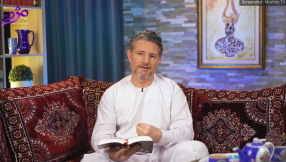
Afghanistan's first dedicated Christian TV channel launches despite Taliban restrictions
Mozhda TV, which its founders describe as the first Afghan Christian television channel, began broadcasting Saturday, Oct. 24, as church leaders, mission partners and Afghan believers gathered to mark its launch.








