
|PIC1|“If icebergs break off and float past the south coast of New Zealand we wonder what is coming next," said the Rev Asora Amosa, a Samoan-born pastor of the Presbyterian Church of Aotearoa New Zealand.
Amosa was speaking of threats to the region at the United Nations Advocacy Week of the World Council of Churches (WCC) last week.
During the advocacy week, Christians from the Pacific islands appealed for support from the international community as they battle against the odds in the face of climate change, a question of life and death in their communities.
More than 100 representatives from churches and organisations working to care for God's creation came together for the advocacy week.
Amosa stressed that efforts to mitigate the impact of climate change had to be united.
“We have criticised the industrialised nations for failing to take courageous action, but we realise also that the time for according blame has gone.”
Rev Baranite Kirata is from Kiribati, one of three Pacific island states slowly disappearing under rising sea levels and expected to be lost completely to the waves in the foreseeable future.
Rev Kirata knows all too well that the island's people will become refugees but learning to say goodbye to the one place in the world he calls home is no easy task.
“Myself, when I am travelling my heart always longs for home, for where I can cry and rejoice with my people,” Kirata said.
People in Kiribati are already losing their homes and livelihoods to ever increasing and more devastating floods at the same time as fish stocks continue to decrease. Diseases and extreme heat are just two of the associated threats to their health. As an elderly lady on one of the outer islands once told the pastor: “The sun burns as if it was just above my head.”
The rising sea levels are not only forcing people from their homes. The salt water is killing the roots of trees and polluting wells in the areas not yet submerged. At the same time, rainfall, the second source of drinking water for the islanders, is becoming more scarce.
Eaten by the waves
For the Pacific churches, the issue is not only political and economic, but deeply theological, ethical and spiritual. They feel that their place in God's creation is at stake. “The storms and waves eat away our beaches and as they continue they will some day eat us,” said Kirata.
Those whose houses on the coast have been destroyed move further inland. It is clear, however, that this is not a lasting solution. “If we don't end up in the lagoon, we will end up fighting each other over land, food, water.”
Fe'iloakitau Kaho Tevi, general secretary of the Pacific Conference of Churches, said he had already received many requests to help relocate places of worship from threatened coastal areas to higher ground.
Churches in the Pacific have developed action plans and conservation activities. Pacific islanders also cooperate with partners in the North in raising awareness.
For example, recently a small boat full of “climate refugees” including two Pacific islanders in traditional attire floated on the River Spree in front of the German parliament, giving visibility to the issue during a Stop Coal Campaign supported by the agencies Bread for the World and EED of the Evangelical Church in Germany.
The discussions at the event in New York underscored the injustice that the populations who will be hardest hit by the atmospheric changes are the ones who have hardly contributed to them. While for example European countries have only few low-lying, densely populated areas, the resources they have available for the construction of seawalls exceed by far the possibilities of island states like Kiribati.
Elias Crisostomo Abramides of the Greek Orthodox Archdiocese of Buenos Aires and South America affirmed the WCC's role as the voice for ethical and justice issues during international negotiations on climate protection.
Objectives of Church advocacy
Rev Jorge Domingues, a Brazilian from the United Methodist Church, called on Christians in the financial markets to adopt a shareholder advocacy policy and press companies on climate change agenda. He added that churches also need to consider the carbon footprint of their own work.
Tevi, the general secretary of the Pacific Conference of Churches, said a series of actions the churches should advocate includes contributing to an adaptation fund based on the “polluter pays” principle and calculating each country’s greenhouse gas emissions and gross domestic product.
Another action is the promotion of renewable energy, as opposed to non-permanent solutions like carbon capture or nuclear power of which the Pacific islanders have “bad memories”. Tevi also called for research into the cultural, legal and economic implications of a nation's sovereign territory disappearing.
With a mixture of realism and optimism, Rev Baranite Kirata explained that “it is now too late to do something for Kiribati, Tuvalu and the Marshall Islands; but together, we are the world, and it is not too late to do something for us all.”
11% OFF

VitaUp Beet Root Gummies with CoQ10 & Grape Seed - Nitric Oxide Circulation Support (60 Count)
$24.91 $27.91
50% OFF
HDPE All-Weather Adirondack Chair with Built-In Cup Holder - Tool-Free Assembly (Grey)
$69.99 $139.99
60% OFF

HOMETUK Clear Plastic Storage Bins with Dividers - 3-Pack Stackable Acrylic Organizer Containers for Fridge and Pantry
$19.99 $49.99
58% OFF
G Gradual Men's Fishing Shirt - UPF 50+ Lightweight Short Sleeve Button Down with Zipper Pockets
$14.99 $35.99
55% OFF

Everyfun 60" Rectangular Platform Tree Swing - 700lbs Heavy Duty Adjustable Outdoor Swing (Colorful)
$49.99 $110.99
61% OFF

Ekouaer Women's Casual Loose Jumpsuit - One-Piece Printed Sleeveless Wide Leg Romper with Pockets
$14.99 $37.99
40% OFF

ROTAKE TB3 20V Heavy Duty 1/2" Cordless Impact Wrench Kit - 1380 Ft-Lbs Torque
$132 $219.99
36% OFF

Men's Athletic Running Shorts with Zipper Pockets - Lightweight & Quick Dry
$12.74 $19.99
61% OFF
Modern Ceiling Fan with Light and Remote - Reversible Quiet DC Motor
$69.3 $179.99
50% OFF

MOOKA H13 True HEPA Air Purifier for Home Large Room - 1076 sq ft Odor Eliminator
$39.97 $79.95
60% OFF

Ekouaer Women's Satin Silky Pajama Set - Short Sleeve Pullover Top & Wide-Leg Pants
$13.99 $34.99
55% OFF

Ekouaer 3-Piece Maternity & Nursing Pajamas Set - Short Sleeve Top with Shorts and Pants
$14.99 $32.99
Sealy 2-Pack Tritech 16" Twin Inflatable Air Mattress with Built-in AC Pump
$0 $113.99
20% OFF
INTEX Prism Frame 20ft x 52in Above Ground Pool Set - Round Steel Frame Swimming Pool
$695.99 $869.99

Gardner Pet 43" Heavy Duty Dog Crate with Wheels - Indestructible Folding Metal Cage (Black)
$0 $149.99
12% OFF

Elegant Mid-Century Modern Bar Stools - Set of 4
$395.99 $449.99
23% OFF
Ergonomic Office Chair - Big and Tall Desk Chair with Adjustable Lumbar Support
$279.99 $363.99
26% OFF

Magnelex American Flag Windshield Sun Shade - High-Resolution UV Reflective Heat Shield (X-Large)
$19.9 $26.9
20% OFF

EVIQO 48 Amp NACS Level 2 EV Charger - Hardwired Smart WiFi Wall Charger for Tesla
$368.51 $458.55
50% OFF

DBFIT Air Purifier for Home Large Room
$29.99 $59.99




-
Historic Lancashire church secures £250,000 National Lottery grant for major roof repairs
-

Sunderland Minster PCC was right to push back over trans toilet sign
-

Bethel Church distances itself from Todd Bentley and Mike Bickle
-

Christian police officer reaches settlement over diversity training discrimination claim
-
Turkey's hidden Christian past: Extraordinary discoveries are rewriting the story of early Christianity
-

Diary of a CEO’s Steven Bartlett and John Lennox discuss AI, faith and the search for meaning
Most Popular
News

Huge poll shows no public desire for assisted suicide
A poll of over 10,000 people has suggested limited public support for reviving the failed Kim Leadbeater bill to legalise assisted suicide.
Churches must disciple well and listen well in response to rise of Christian nationalism
Churches have a task on their hands to raise standards of theological literacy in their congregations amid growing Christian nationalism, while at the same time listening to and engaging with the concerns of people in their flock.

A Christian response to the crisis facing young people
The Church has a wonderful message of hope to share with young people increasingly feeling a sense of nihilism and hopelessness at the state of the world, writes Tim Farron.
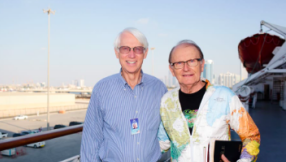
Tributes paid to Operation Mobilisation co-founder Dale Rhoton
Tributes have been paid to Dale Rhoton, one of the co-founders of international mission organisation Operation Mobilisation (OM), after his death at the age of 88.
VitaUp Beet Root Gummies with CoQ10 & Grape Seed - Nitric Oxide Circulation Support (60 Count)
$24.91
HDPE All-Weather Adirondack Chair with Built-In Cup Holder - Tool-Free Assembly (Grey)
$69.99
HOMETUK Clear Plastic Storage Bins with Dividers - 3-Pack Stackable Acrylic Organizer Containers for Fridge and Pantry
$19.99
G Gradual Men's Fishing Shirt - UPF 50+ Lightweight Short Sleeve Button Down with Zipper Pockets
$14.99
Everyfun 60" Rectangular Platform Tree Swing - 700lbs Heavy Duty Adjustable Outdoor Swing (Colorful)
$49.99
Ekouaer Women's Casual Loose Jumpsuit - One-Piece Printed Sleeveless Wide Leg Romper with Pockets
$14.99
ROTAKE TB3 20V Heavy Duty 1/2" Cordless Impact Wrench Kit - 1380 Ft-Lbs Torque
$132
Men's Athletic Running Shorts with Zipper Pockets - Lightweight & Quick Dry
$12.74
Modern Ceiling Fan with Light and Remote - Reversible Quiet DC Motor
$69.3
MOOKA H13 True HEPA Air Purifier for Home Large Room - 1076 sq ft Odor Eliminator
$39.97
Ekouaer Women's Satin Silky Pajama Set - Short Sleeve Pullover Top & Wide-Leg Pants
$13.99
Ekouaer 3-Piece Maternity & Nursing Pajamas Set - Short Sleeve Top with Shorts and Pants
$14.99
Sealy 2-Pack Tritech 16" Twin Inflatable Air Mattress with Built-in AC Pump
$0
INTEX Prism Frame 20ft x 52in Above Ground Pool Set - Round Steel Frame Swimming Pool
$695.99
Gardner Pet 43" Heavy Duty Dog Crate with Wheels - Indestructible Folding Metal Cage (Black)
$0
Elegant Mid-Century Modern Bar Stools - Set of 4
$395.99
Ergonomic Office Chair - Big and Tall Desk Chair with Adjustable Lumbar Support
$279.99
Magnelex American Flag Windshield Sun Shade - High-Resolution UV Reflective Heat Shield (X-Large)
$19.9
EVIQO 48 Amp NACS Level 2 EV Charger - Hardwired Smart WiFi Wall Charger for Tesla
$368.51
DBFIT Air Purifier for Home Large Room
$29.99