
In his address to the Central Committee yesterday, WCC Moderator the Rev Dr Walter Altmann said the WCC had been “surprised” by the wave of civil protests in Arab countries, saying that they had highlighted the “risk of policies that affront human dignity and oppress whole populations”.
He said recent developments revealed once again the “pressing need” to achieve peace and protect the rights of people in the Middle East.
“The inability of the nations involved to achieve this essential aim is not only due to the complexity of the situation and the large numbers of actors involved, but also to a persistent lack of political will to make the concessions that are essential in order to attain it”, he said.
“It is therefore right for the WCC to place even more intensively on its agenda our concern for the Middle East, especially for the Holy Land, by seeking out opportunities for dialogue and occasions for encounter between Jews, Christians and Muslims.”
In his report presented to the Central Committee, WCC General Secretary the Rev Dr Olav Fykse Tveit said that the call of churches “to be peacemakers” and the call to be one could be brought into a “new agenda”.
He said the challenges in the Middle East were “particularly pressing” but added that the mass demonstrations in Egypt “were a miracle and an encouraging sign for all of us that justice and freedom can be established through peaceful and non-violent actions”.
He also paid tribute to the church in Egypt for its message of love and peace in the days following a deadly bomb attack on a church in Alexandria.
“The churches should be part of discussions on how to protect everyone from violence and how to overcome injustice, how to build a just peace for the future,” he said.
The pursuit of a just peace will form part of the discussions at the WCC’s International Ecumenical Peace Convocation in Kingston, Jamaica, in May.
Dr Tveit continued: “There is an important role for us [as] a fellowship of churches to continue the reflections on and give our contributions to democratic processes and to building sustainable justice and peace.”
He noted that churches also had a role to play in developments in Sudan, where he congratulated the people of Southern Sudan on the “dignified process” by which they had recently voted to secede from the North.
The General Secretary went on to address the ongoing conflicts in the Holy Land, where talks between Israelis and Palestinians have stalled.
He strongly denied the suggestion that the WCC was an “anti-Jewish organisation”, saying that there was much more the WCC could do with its Jewish partners to promote peace for all in the region.
He maintained, however, that there was a need for a “sustainable peace without occupation” in the Palestinian territories and that Jerusalem should be shared by the three faiths.
“Jerusalem is a holy city for Jews, Christians and Muslims,” he said.
“The three religions should share this city and have equal free access to the holy sites within it.
“The faithful in all three religions need to find ways of living together in justice and peace so that the cradles of our religions can be a sign of hope for the whole of humanity.”
Turning his attention to the question of church unity, the General Secretary spoke of an improvement in relations between ecumenicals and evangelicals, noting his recent address to the Third Lausanne Congress on World Evangelisation in Cape Town last October - Dr Tveit was the first WCC leader to address a Lausanne Congress.
He said: “I see a convergence that is definitely different from 35 years ago. The distance between Lausanne and Geneva is not felt to be that far anymore.
“We have convergence in agendas. Most of what has been on our agenda for decades is also being actively addressed by evangelical institutions (e.g. advocacy work, human rights, peace building, environmental issues and relations to people of other faiths).”
He also acknowledged his invitation to the address the Pentecostal World Conference and joint efforts between the WCC and the World Evangelical Alliance on the issue of conversion.
The Central Committee of the WCC is meeting in Geneva until next Tuesday. Also on the agenda is the theme of the next General Assembly in Busan, South Korea, in 2013, the ongoing governance review of the WCC, and relations between women and men in church and society.
-

New pilgrimage route follows in the footsteps of the Manx Bible translators
-

Survey finds Gen Z most likely to identify as religious
-

Christian social worker returns to Court of Appeal in dispute over withdrawn job offer
-

Australia's anti-therapy laws harm the most vulnerable - Britain should not copy them
News
-

Edinburgh University ends divinity programmes as theology faces a changing future
-
What links Tommy Robinson, Andrew Tate and the CofE’s newest diocesan bishop?
-

Third of young people now turning to AI for friendship, research finds
-

Why the Archbishop of Canterbury’s award controversy matters
-

Catholicism in France has 'collapsed'
-
From Genesis to Revelation: The ambitious AI project turning the Bible into music
Most Popular
News

Why New Age spirituality isn’t neutral
The problem is not the recognition that there is more to life than what we can see; Christianity agrees that there is. The question is where we go looking for answers.
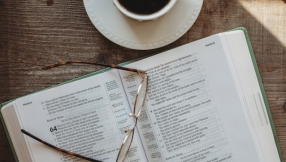
More than one in four US Protestant churchgoers believe some biblical truths become outdated
US Protestant churchgoers who hold evangelical beliefs are more likely than their non-evangelical counterparts to express confidence in the Bible and its continuing authority, according to new research from Lifeway Research.

Cost of living crisis is ‘busting family budgets and increasing social isolation for children’ - report
Rising living costs are forcing many UK parents to reduce activities for their children and, in some cases, use child benefits to cover household essentials, according to new research from Child Poverty Action Group (CPAG).
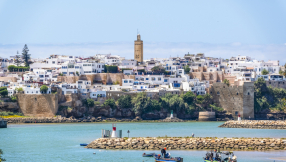
Religious freedom in Morocco is ‘substantively limited’, report warns
A new report has questioned Morocco’s claims to religious tolerance, arguing that laws relating to Ramadan observance, burial and conversion continue to limit freedom of religion despite constitutional protections.








