Chinese officials banned from religion even after retirement

Chinese officials are banned from religious activities even after they retire, state media said on Friday.

Reuters reports that Communist Party officials must oppose what the government calls "cults" and not become religious, even after they have left state service, according to new rules issued from the party's powerful Organisation Department.
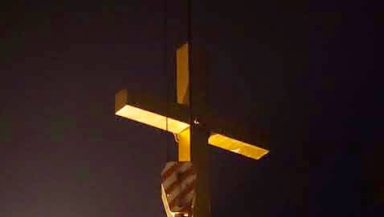
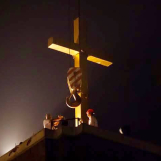
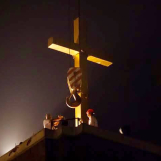
A church cross in Zhejiang is demolished as part of a wider state crackdown on religion China Aid

Although the Chinese constitution allows for freedom of belief, in reality the officially-atheist ruling Communist Party keeps a tight rein on religious activities. Officials who are party members are not supposed to practise religion.

The Organisation Department, which oversees personnel decisions, has now said retired officials who were also party members have to follow these rules too.

"There are clear rules that retired officials who are party members cannot believe in religion and cannot attend religious activities, and must resolutely struggle against evil cults," an unnamed official said in the lengthy explanation.

Retired officials must also be aware that "certain ethnic minority folk custom activities" they happen to attend are nothing to do with religion, the official added, without elaborating.

The new rules continue a crackdown on religious activity in China with a number of pastors and human rights activists detained in recent months. Among them is Pastor Gu Yuese of China's largest Protestant church, the 10,000-member Chongyi Church, who was removed from his position without warning by the authorities, accused of embezzling church funds and detained in a so-called 'black jail'.

His treatment has been linked by human rights activists with his stand against the removal of crosses from churches. Demonstrations against this programme have been crushed with force and numerous church buildings have been demolished.

The growth of Christianity in China has been exponential and authorities have targeted churches, which they see as dangerous cults.

Additional reporting from Reuters.

related articles
Christians face obscene persecution – let\'s not be afraid to say so
Christians face obscene persecution – let's not be afraid to say so

Christians face obscene persecution – let's not be afraid to say so

China: Church authorities dismiss pastor who protested against cross removals

China: Church authorities dismiss pastor who protested against cross removals

China: Call for churches to be banned in city of Confucius\' birth
China: Call for churches to be banned in city of Confucius' birth

China: Call for churches to be banned in city of Confucius' birth

China: Pastor who protested cross removals is detained, accused of fraud

China: Pastor who protested cross removals is detained, accused of fraud

Hong Kong: Top Christian leader signals softening of attitude to Beijing

Hong Kong: Top Christian leader signals softening of attitude to Beijing

News
Russia and Ukraine agree to temporary Orthodox Easter truce

In the Orthodox calendar, Easter falls one week after the date celebrated in western Europe.

Bishop urges people of Britain to stand up for Christian truth

It follows an earlier open letter addressed to King Charles, calling upon him to defend Christianity in line with his titles of Supreme Governor of the Church of England and "Defender of the Faith".

Fundraising Regulator reminds churches that collections are subject to code of practice

Churches can breach the code even when acting in good faith.

Religion is often left unspoken in the workplace despite widespread faith identity, research finds

Fifteen per cent of UK employees with a faith say they have experienced religious discrimination in the workplace.