Catholic ethics body: Zika virus outbreak does not justify 'intrinsically immoral' use of contraceptives

Pope Francis has already said that the use of contraceptives can be considered permissible to stop the further spread of the Zika virus.

The most respected Catholic ethics body in the United States, however, remains steadfast in its opposition to the use of condoms and pills, even in the face of this public health emergency.

In an opinion article published on LifeSite News, the National Catholic Bioethics Center said the threats posed by the Zika virus infection, especially to pregnant mothers and their babies, still do not justify contraceptive use.

The ethics body, whose board of directors includes five Archbishops and three Cardinals, maintained that the suspected connection between the Zika virus and the condition called microcephaly, which makes babies have abnormally small heads, does not warrant a change in the "Catholic Church's consistent teachings on the sacredness and inviolability of human life and the dignity."

The group further said that the Catholic Church should still value the "beauty of the means of transmitting life through marital relations" even with the threat of the Zika virus.

"Contraceptive acts are intrinsically immoral and contrary to these great goods," the ethics body said in its commentary.

The Catholic ethics group also pointed out that there is still no confirmation that the Zika virus is linked to microcephaly. Thus the body said the use of condoms should not be equated to something good or morally right.

"Apart from the scientific questions about the actual effectiveness of condoms in disease prevention, using condoms to reduce the likelihood of Zika transmission amounts to directly intending contraceptive acts of intercourse as a means to a good end," the body said.

"Condom use could not have the effect of preventing pregnancy, but it would prevent a true marital act from taking place, which always involves a complete giving and receiving on the part of the husband and wife," it added.

The ethics body also rejected proposals to allow abortions on unborn babies affected by the Zika virus.

"Proposing abortion as a medical solution to the child's pathology is suggesting the direct destruction of innocent human life as a means of healing," the Catholic group said.


related articles
Pope Francis: Contraception is 'lesser of two evils' in Zika virus outbreak

Pope Francis: Contraception is 'lesser of two evils' in Zika virus outbreak

More babies with deformity linked to Zika virus may be abandoned by their moms

More babies with deformity linked to Zika virus may be abandoned by their moms

Pope agrees to contraception in emergency cases like preventing Zika virus infection, Vatican confirms

Pope agrees to contraception in emergency cases like preventing Zika virus infection, Vatican confirms

U.N. pushes countries to prioritise LGBT rights, abortion as part of its global plan

U.N. pushes countries to prioritise LGBT rights, abortion as part of its global plan

News
People view religious education positively, study finds

The government is consulting on plans to add RE to the national curriculum.

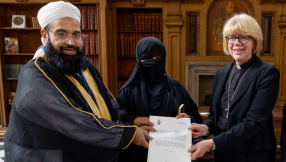
Archbishop of Canterbury withdraws award given to Muslim cleric who praised Bin Laden

Reform leader Nigel Farage said the decision to award Hafiz Muhammad Tahir Mehmood Ashrafi was "astonishing". 

How the new General Synod could move beyond the present disagreement over same-sex relationships

How might the next Synod make progress in the next five years based on a recognition that there are those in the Church of England who hold fundamentally opposed positions on the matter? Is there a way of allowing both sides to achieve what they want? Martin Davie argues that the answer to this question is ‘Yes.’

No part of London should become a free speech, gospel exclusion zone

Soho is not exempt from freedom of speech and Christian expression. And Christians do not lose their fundamental freedoms when they cross an invisible boundary into a neighbourhood associated with a different worldview. The streets of London belong to all of us, writes Andrea Williams.