In what could stand as the biggest saint-making service in history, the Armenian Church is preparing to canonise up to 1.5 million victims of the Armenian genocide in one go.
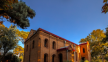
The Armenian Apostolic Church is to mark the 100th anniversary of the atrocity, which saw Turkey stripped of its Armenian population in 1915, with a liturgy on April 23 at the Patriarchal See of the Catholicosate in Echmiadzin Cathedral, the extraordinarily beautiful mother church of the denomination at Vagharshapat in Armenia.
The announcement was made during a press conference held on 3 February at the Patriarchal See.
Patriarch Karekin said in a statement: "The Armenian Church does not sanctify. It recognizes the sanctity of saints or of those people that is already common among people or has been shown with evidence. The Church recognizes only what happened, that is, the genocide".
The decision to recognise the victims of the genocide as saints was made in September 2013, during a meeting at Echmiadzin.
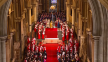
In the liturgy on the April 23 the Psalm "martyrs of April", composed by the late Bishop Zareh Aznavourian, will be used as the psalm for the canonization. The canonization will be attended by heads of sister Oriental Churches and delegations of other Churches.
Soon after he became Pope in 2013, Pope Francis canonised 800 martyrs killed in the 15th century by Ottoman Turks for refusing to convert to Islam known as the "martyrs of Otranto".
Fr Alexander Lucie-Smith wrote in The Catholic Herald this week of how on April 24 1915 the Ottoman government began to arrest and deport Armenians who had been living in Anatolia "from time immemorial".
The organised campaign of arrest, deportation, massacre and extermination led to the deaths of up to 1.5 million Armenians. "It is for this reason that visitors to Turkey today will find plenty of Armenian history but no actual Armenian people, or at least very few."
He added: "The Armenian genocide is commemorated all over the world, but not in Turkey and not much in Britain, which studiously avoids mentioning the genocide in order not to jeopardise relations with Turkey."
He cited Hitler's view of the Armenian genocide: "Our strength is our quickness and our brutality... Who still talks nowadays of the extermination of the Armenians?"