
A team of Italian archaeologists has announced the discovery here of what they believe to be the tomb of Philip, one of Jesus' 12 apostles.
The tomb has been discovered in the ancient Asia Minor city of Hierapolis in Turkey's Aegean province of Denizli, and are planning to excavate the unopened grave soon.
The New Testament saint came to Hierapolis - known today as Pamukkale - nearly 2,000 years ago to spread the Gospel and was crucified upside down by the Romans.
The discovery of the grave will attract immense attention around the world, said excavator Francesco D'Andria, director of the Institute of Archaeological Heritage, Monuments and Sites at Italy's National Research Council in Lecce.
Philip's tomb has traditionally been associated with the martyrium church built at the site, though no evidence of the ancient burial was ever found. In July, however, D'Andria and his team located a smaller church less than 150 feet away from the martyrium that appears to contain the grave of the apostle.
"As we were cleaning out the new church we discovered a month ago, we finally found the grave," said D'Andria. "With close examination, we determined that the grave had been moved from its previous location in the St Philip Church to this new church in the fifth century, during the Byzantine era."
D'Andria has been leading archeological excavations at the ancient city for 32 years. Hierapolis was founded around 190 BC by Eumenes II, King of Pergamum (197 BC-159 BC).
The Hellenistic city was given over to Rome in 133 BC and grew into a flourishing Roman metropolis, with temples, a theatre and popular sacred hot springs, believed to have healing properties.
"Until recently, we thought the grave of St Philip was on Martyrs' Hill, but we discovered no traces of him in the geophysical research conducted in that area. A month ago, we discovered the remnants of an unknown church, 40 metres away from the St Philip Church on Martyrs' Hill. And in that church we discovered the grave of St Philip," D'Andria said.
"We are extremely happy and proud to have discovered the grave of a saint whose name appears in the bible - this surely is an important discovery for religious tourism, archaeology and Christendom."
-
New pilgrimage route follows in the footsteps of the Manx Bible translators
-

Survey finds Gen Z most likely to identify as religious
-

Christian social worker returns to Court of Appeal in dispute over withdrawn job offer
-
Australia's anti-therapy laws harm the most vulnerable - Britain should not copy them
News
-

Edinburgh University ends divinity programmes as theology faces a changing future
-
What links Tommy Robinson, Andrew Tate and the CofE’s newest diocesan bishop?
-

Third of young people now turning to AI for friendship, research finds
-

Why the Archbishop of Canterbury’s award controversy matters
-

Catholicism in France has 'collapsed'
-

From Genesis to Revelation: The ambitious AI project turning the Bible into music
Most Popular
News

Why New Age spirituality isn’t neutral
The problem is not the recognition that there is more to life than what we can see; Christianity agrees that there is. The question is where we go looking for answers.
More than one in four US Protestant churchgoers believe some biblical truths become outdated
US Protestant churchgoers who hold evangelical beliefs are more likely than their non-evangelical counterparts to express confidence in the Bible and its continuing authority, according to new research from Lifeway Research.

Cost of living crisis is ‘busting family budgets and increasing social isolation for children’ - report
Rising living costs are forcing many UK parents to reduce activities for their children and, in some cases, use child benefits to cover household essentials, according to new research from Child Poverty Action Group (CPAG).
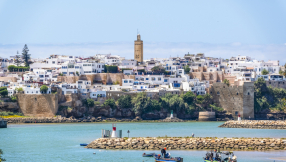
Religious freedom in Morocco is ‘substantively limited’, report warns
A new report has questioned Morocco’s claims to religious tolerance, arguing that laws relating to Ramadan observance, burial and conversion continue to limit freedom of religion despite constitutional protections.








