
|PIC1|They also want to feel a greater sense of personal connectedness with the companies they deal with in everyday life.
Recently, I was invited to offer radio, TV and press comment on a survey undertaken by one of Britain's leading healthcare providers. The UK-wide study highlighted the dissatisfaction many customers feel with the level of attention they're receiving - especially from banks, utilities and health and other service providers.
The study, conducted by the Benenden Healthcare Society, showed that almost 14 million people have either changed or considered changing their bank, healthcare or utility provider in the past year because they didn't feel they were getting 'anything back' from the relationship.
Among other things, it also found that one in 10 people in Britain are about to terminate supplier agreements due to a lack of trust or respect.
Overall, the study has important implications not just for service providers, but for all companies and organisations. Whether you lead a corporation, small business, government body, charity, club or faith community, there are lessons for us all.
The first lesson is straightforward: people want services that add real value to their lives over the long-term, rather than those that simply provide immediate convenience.
This is perhaps a predictable reaction to the short-term thinking that many feel led us into recession in the first place, especially on the part of finance and banking industries and government bodies charged with regulating them.
From here on, any enterprise that wants to enlist public support will need to ensure that it does more than meet a basic material or economic need.
Companies and organizations will need to offer ideas and projects that are value-adding - that is, ideas that help people achieve the things they aspire to most, such as respect, significance and meaning.
This may seem a little too 'fuzzy' for some hard-headed company directors, but there will be no escaping the consequences for groups that fail to deliver at this level.
Secondly, the study's findings revealed a major shift toward what 'old fashioned' values. It seems consumers are now looking for the same values in both their professional and personal relationships - particularly trust, mutual respect and loyalty.
This I think has arisen not just because of recession; it is a response to globalisation, the pace of change and the high levels of mobility in society today.
As globalism grows - as barriers to trade, commerce and communication are torn down - so does tribalism. People appreciate the benefits of global markets and multicultural communities, but they also want to seek out other people who share their particular background, experiences, values and ideals.
Meanwhile, as mobility in society increases many people feel that their sense of community is under threat. More than a few feel the need to form new 'families' and 'neighbourhoods' - even with companies from whom they buy goods and services.
As consumers, we're no longer interested in just the traditional customer-supplier relationship - we want a sense of respectful familiarity, of shared destiny, and the kind of trust that produces a 'win-win' situation.
Any enterprise that wants to enlist public support will need to offer clear opportunities for this kind of connection.
If you're in corporate leadership or management, this is the time to make those personal calls to the individuals you've not spoken with for a long time (if at all). Now is the time to dismantle your reliance on customer relations management, which has turned personal interaction into a software-driven function rather than a human relationship.
It's not just connection with the provider that consumers want, though: they're seeking connection with each other. This is the time to create opportunities for people to be part of a community - and in particular a community that actively brings change.
This is the age of the 'wisdom of crowds', or what one writer has called 'the hive mentality'. It is expressed in the catchphrase of one of Europe's biggest telecoms providers: 'We're better, connected.'
The ongoing digital media revolution has ushered in an age of interconnectedness the like of which the world has never seen. Wikipedia is not just a cause, it is a community; and fast-growing web-based organizations like Kiva thrive because they allow people to connect while doing good.
This brings us to the third significant lesson from the Benenden study - and I touched on it at the beginning of this article.
Consumers no longer want to be consumers alone - they're looking for alliances through which they can become activists.
In this downturn, people are increasingly drawn to companies that allow them the opportunity to affect change in the wider world while having their own needs met. People want to feel that they're directly or indirectly making a difference to the lives of others and the health of the community as a whole.
Corporate social responsibility (CSR) is an often belittled term in corporate circles; it's certainly one that has many definitions. I like the one offered by Mallen Baker of the UK's Business in the Community group: CSR is about 'how companies manage the business processes to product an overall positive impact on society.'
This kind of social responsibility, even social welfare, is going to become increasingly important for companies and organizations that want to emerge from the downturn with renewed public trust.
One thing has become abundantly clear in this recession: when material security declines, moral altruism goes through the roof.
When people feel they can no longer define themselves according to their income, job status or mortgage - these things become very shaky in a recession - they start to look for other ways to declare their values and their place in the world.
They seek out causes and projects that will enrich their personal stories.
Late last year, in the midst of the worst economic downturn Britain has faced in 30 years, its people gave a record sum to Red Nose Day, the nation's most famous fund-raising event.
At the same time, volunteerism is on the rise, in Britain and throughout the developed world. More and more top level corporate figures are investing large swathes of their time and money in support of charities and philanthropic ventures.
Meanwhile, ethical buying is increasing as more commercial enterprises commit to ecological responsibility, Fair Trade goods and making a stand against such crimes as people trafficking.
These are reflections of a growing taste for altruistic behaviour.
Martin Luther King Jnr. once said that a human being hasn't begun to live until he or she can look above their own concerns and see those of the broader humanity. Recession has brought that kind of thinking to the fore.
Do you want to head a project or organization that attracts gifted, resourceful and energetic people? Start looking beyond your bottom line profit; look for ways to produce positive, pragmatic and realistic change on some important local, regional or global issue. And be prepared to be totally transparent and accountable for any promises you make.
The Benenden study gives leaders of all stripes much food for thought. One thing is certain: business as usual is no longer going to be enough to engage public trust and loyalty.
About Mal Fletcher:
Mal Fletcher is an author, business and media consultant, media commentator, global conference speaker and broadcaster based in London.
He has pioneered several major leadership networks and is the chairman of 2020 Plus, a London-based leadership and communications consultancy which is helping business, media and community groups to proactively engage future change, especially in difficult times.
Mal hosts the annual Strategic Leadership Consultation, which he founded in 1998, and was the founding National Director of Youth Alive Australia, a large, nationwide organisation teaching positive values to young people and running drug and alcohol-free events.
Follow Mal on Twitter www.twitter.com/malfletcher or go to www.2020Plus.org for more information. Copyright Mal Fletcher 2009
11% OFF

VitaUp Beet Root Gummies with CoQ10 & Grape Seed - Nitric Oxide Circulation Support (60 Count)
$24.91 $27.91
50% OFF

HDPE All-Weather Adirondack Chair with Built-In Cup Holder - Tool-Free Assembly (Grey)
$69.99 $139.99
60% OFF

HOMETUK Clear Plastic Storage Bins with Dividers - 3-Pack Stackable Acrylic Organizer Containers for Fridge and Pantry
$19.99 $49.99
58% OFF

G Gradual Men's Fishing Shirt - UPF 50+ Lightweight Short Sleeve Button Down with Zipper Pockets
$14.99 $35.99
55% OFF

Everyfun 60" Rectangular Platform Tree Swing - 700lbs Heavy Duty Adjustable Outdoor Swing (Colorful)
$49.99 $110.99
61% OFF

Ekouaer Women's Casual Loose Jumpsuit - One-Piece Printed Sleeveless Wide Leg Romper with Pockets
$14.99 $37.99
40% OFF

ROTAKE TB3 20V Heavy Duty 1/2" Cordless Impact Wrench Kit - 1380 Ft-Lbs Torque
$132 $219.99
36% OFF

Men's Athletic Running Shorts with Zipper Pockets - Lightweight & Quick Dry
$12.74 $19.99
61% OFF

Modern Ceiling Fan with Light and Remote - Reversible Quiet DC Motor
$69.3 $179.99
50% OFF

MOOKA H13 True HEPA Air Purifier for Home Large Room - 1076 sq ft Odor Eliminator
$39.97 $79.95
60% OFF

Ekouaer Women's Satin Silky Pajama Set - Short Sleeve Pullover Top & Wide-Leg Pants
$13.99 $34.99
55% OFF

Ekouaer 3-Piece Maternity & Nursing Pajamas Set - Short Sleeve Top with Shorts and Pants
$14.99 $32.99

Sealy 2-Pack Tritech 16" Twin Inflatable Air Mattress with Built-in AC Pump
$0 $113.99
20% OFF

INTEX Prism Frame 20ft x 52in Above Ground Pool Set - Round Steel Frame Swimming Pool
$695.99 $869.99

Gardner Pet 43" Heavy Duty Dog Crate with Wheels - Indestructible Folding Metal Cage (Black)
$0 $149.99
12% OFF

Elegant Mid-Century Modern Bar Stools - Set of 4
$395.99 $449.99
23% OFF

Ergonomic Office Chair - Big and Tall Desk Chair with Adjustable Lumbar Support
$279.99 $363.99
26% OFF

Magnelex American Flag Windshield Sun Shade - High-Resolution UV Reflective Heat Shield (X-Large)
$19.9 $26.9
20% OFF
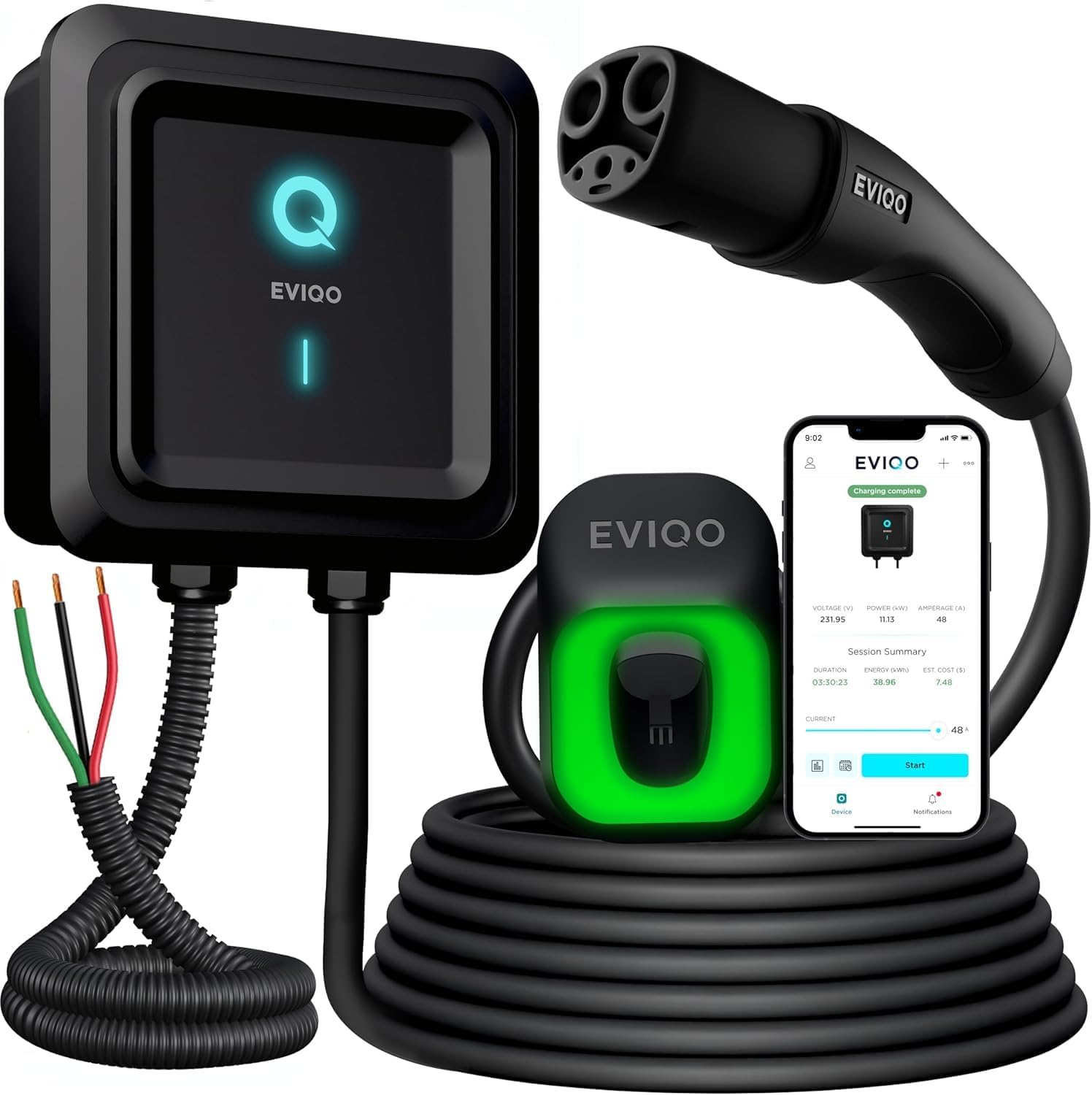
EVIQO 48 Amp NACS Level 2 EV Charger - Hardwired Smart WiFi Wall Charger for Tesla
$368.51 $458.55
50% OFF
DBFIT Air Purifier for Home Large Room
$29.99 $59.99




-

Historic Lancashire church secures £250,000 National Lottery grant for major roof repairs
-

Sunderland Minster PCC was right to push back over trans toilet sign
-

Bethel Church distances itself from Todd Bentley and Mike Bickle
-

Christian police officer reaches settlement over diversity training discrimination claim
-

Turkey's hidden Christian past: Extraordinary discoveries are rewriting the story of early Christianity
-

Diary of a CEO’s Steven Bartlett and John Lennox discuss AI, faith and the search for meaning
Most Popular
News

Pride and the Gospel: the way of self or the way of Christ?
As Christians, our understanding of pride is shaped not primarily by culture, but by Scripture.

Campaign urging greater support for Christian education
Unite for Education founder, Niel Deepnarain, said Christians must be willing to engage publicly with educational issues rather than remain silent.

Welsh reverend speaks of culture of fear over LGBT issues
Many people have already left the Church in Wales over its stance on same-sex relationships, an evangelical leader has said.

Reddit users declare small Welsh church best place in the world
Users voted to eliminate one half of a map until only one location remained.
VitaUp Beet Root Gummies with CoQ10 & Grape Seed - Nitric Oxide Circulation Support (60 Count)
$24.91
HDPE All-Weather Adirondack Chair with Built-In Cup Holder - Tool-Free Assembly (Grey)
$69.99
HOMETUK Clear Plastic Storage Bins with Dividers - 3-Pack Stackable Acrylic Organizer Containers for Fridge and Pantry
$19.99
G Gradual Men's Fishing Shirt - UPF 50+ Lightweight Short Sleeve Button Down with Zipper Pockets
$14.99
Everyfun 60" Rectangular Platform Tree Swing - 700lbs Heavy Duty Adjustable Outdoor Swing (Colorful)
$49.99
Ekouaer Women's Casual Loose Jumpsuit - One-Piece Printed Sleeveless Wide Leg Romper with Pockets
$14.99
ROTAKE TB3 20V Heavy Duty 1/2" Cordless Impact Wrench Kit - 1380 Ft-Lbs Torque
$132
Men's Athletic Running Shorts with Zipper Pockets - Lightweight & Quick Dry
$12.74
Modern Ceiling Fan with Light and Remote - Reversible Quiet DC Motor
$69.3
MOOKA H13 True HEPA Air Purifier for Home Large Room - 1076 sq ft Odor Eliminator
$39.97
Ekouaer Women's Satin Silky Pajama Set - Short Sleeve Pullover Top & Wide-Leg Pants
$13.99
Ekouaer 3-Piece Maternity & Nursing Pajamas Set - Short Sleeve Top with Shorts and Pants
$14.99
Sealy 2-Pack Tritech 16" Twin Inflatable Air Mattress with Built-in AC Pump
$0
INTEX Prism Frame 20ft x 52in Above Ground Pool Set - Round Steel Frame Swimming Pool
$695.99
Gardner Pet 43" Heavy Duty Dog Crate with Wheels - Indestructible Folding Metal Cage (Black)
$0
Elegant Mid-Century Modern Bar Stools - Set of 4
$395.99
Ergonomic Office Chair - Big and Tall Desk Chair with Adjustable Lumbar Support
$279.99
Magnelex American Flag Windshield Sun Shade - High-Resolution UV Reflective Heat Shield (X-Large)
$19.9
EVIQO 48 Amp NACS Level 2 EV Charger - Hardwired Smart WiFi Wall Charger for Tesla
$368.51
DBFIT Air Purifier for Home Large Room
$29.99