A man who was raised in a family that hated Christians is now sharing the Gospel with residents of a Muslim majority town where there has been no church for about seven centuries.
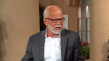
Urim Bogaj had grown up thinking Christians were evil, but he was forced to reexamine his feelings when his aunt converted to Christianity in 1999 and shared the Gospel with him.
Bogaj said that he found it difficult to accept the Gospel when her aunt shared it with him when he was just 15.
"It was hard to listen to her. To receive what she had to say. We always knew that Christians were serpents. Serpents were evil. I did not want to become a Christian," Bogaj said, according to Global News Alliance.
However, as he continued studying the Bible, he eventually became convinced by Christ's message and he converted.
Bogaj's entire family was initially stunned by his conversion but they too have now left Islam after he shared the Gospel with them.
In an attempt to spread the Gospel further, Bogaj has now planted a church in the town of Malisheve in Kosovo. The church is reportedly the first in the town for about 700 years.
"There were challenges. There were different problems. Persecution of every kind," Bogaj said, according to CBN News.
"As the first generation of Christians, we need your prayers to pray for us to be standing strong for Christ...to finish the race and go to the end," he added.
Kosovo, which is mainly populated by ethnic Albanians, declared independence from Serbia in 2008, but many Serbians opposed the declaration as they consider the former province to be the cradle of Orthodox Christianity.
The former Serbian province is predominantly Muslim, but many Orthodox monasteries remain in the country.
Last month, The Serbian Orthodox Church expressed plans to change its name to the Serbian Orthodox Church-Pec Patriarchate in an effort to strengthen its link with Kosovo.
According to Reuters, the name was derived from the Serbian Patriarchate of Pec which existed from 1346 to 1766 in a Kosovo town of the same name before it was abolished by the Ottoman Turks.
The Serbian Orthodox Church continued its relationship with the Pec Patriarchate after Serbia regained its independence in 1879.
"Pec remains ... (a testimony) to our past, of patriarchs and archbishops, and no matter what happened, Pec remains the historical center of our church," Church Patriarch Irinej said.
At Easter, Irinej called on political leaders to reject Kosovo's independence, even if it meant discarding Serbia's efforts in joining the European Union.