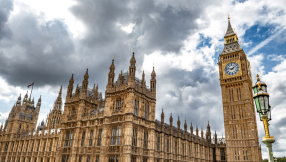
Another election, another Prime Minister. And if you are reading this in the UK, you may well have a new MP. He or she will have a million and one things on their mind right now and plenty of people vying for their attention.
It's unlikely that they will have given a moment's thought to Freedom of Religion or Belief (or FoRB for short) before starting their job.
FoRB is the right to believe and practise any religion or philosophical belief that you choose. Freedom to choose your faith is something that many in the West don't give a second thought to. After all, who would force you to belong to a religion you didn't want to?
Around the world, the answer is "a lot of people". Religious freedom is something that hundreds of millions cannot take for granted. Roughly 365 million Christians according to Open Doors' World Watch List, which ranks the levels of persecution and discrimination that Christians experience around the world. Here are just a few examples:
- In North Korea you can face execution on the spot if you are discovered with a Bible.
- In Nigeria, over 5,000 men, women and children were murdered for their faith over the course of a single year.
- In Afghanistan, thousands of Christians went into hiding, for fear of arrest, torture and execution by the Taliban – simply for being a Christian.
But why should a new MP be concerned about whether someone in Afghanistan can attend church and share their faith in safety?
Firstly, because any government that says it is concerned with human rights should care about FoRB. It is sometimes referred to as the "canary in the coal mine" of human rights and freedoms. In other words, if a country is oppressing people because of their religious beliefs, you can be sure that they will soon be oppressing many more groups, if they are not already doing so. To quote the end of the poem First They Came by Pastor Martin Niemöller:
Then they came for the Jews
And I did not speak out
Because I was not a Jew
Then they came for me
And there was no one left
To speak out for me.
Our current foreign policy legislation talks about a set of vulnerabilities that can make people more likely to face persecution, discrimination, even violence. A person's gender, their sexuality and their race are all acknowledged. We are calling for a person's faith to be another of those factors. Once the faith factor is in place, Christians and other faith groups can be better targeted with aid and support.
The second reason that countries denying their citizens religious freedom should concern MPs is that the UK does business with many of the worst offending nations. For instance, Britain works closely with Nigeria and has massive trade interests there. Likewise, India is a country with which our new government will be hoping to strike a trade deal – it's a place where Christians are systematically marginalised and where tens of thousands have been driven from their homes by violent mobs.
When our politicians visit these nations, discussing cooperation or attempting to strike trade deals, will they mention these abuses and apply a little pressure on the governments?
The final reason that your humble constituency MP should care about FoRB is that they really can make a difference to human lives halfway across the globe. That's especially true when they work with other MPs, pushing for change to some of the most vulnerable people on the planet.
At Open Doors we have been working with MPs and peers from all political parties, encouraging them to work together for change, on behalf of the world's persecuted believers. Every January, we launch our annual World Watch List in Parliament. Last year we were joined by 101 MPs from across the political spectrum.
With our (and others') encouragement the government commissioned an independent review into the persecution of Christians globally. The last government even appointed a special envoy for FoRB – right now we are pushing for that role to be made permanent.
With this new tranche of MPs, we have a challenge and an exciting opportunity. The challenge is that most new MPs have barely heard of FoRB. Most will have barely considered how people are persecuted for their religious faith – far less that Christians could ever be the ones discriminated against.
Your MP is accountable to you, you are their boss. If you vote to get rid of them, they no longer have a job, therefore you have power over them. If enough people tell them that FoRB matters to them, they will sit up and take notice.
Christians in much of the world are voiceless. They have little to no way of sharing their story. The news media are not interested in publishing daily figures on the number of Christians slaughtered in Nigeria. The only way MPs will know what is truly happening is going to be through you – their constituents. Write to your MP, galvanise local support in your churches, you have power to help those that have little or no power of their own.
Encourage your MP to learn more about the persecution of Christians worldwide.
Ben Cohen is the Head of Media and PR for the charity Open Doors UK and Ireland.