Jesus' names and titles in the Bible range from 'Prince of Peace' to 'Immanuel' but to those who knew him best he was simply 'Rabbi'.
In the gospels the disciples repeatedly refer to Jesus as 'Rabbi', which is an Aramaic word meaning 'teacher' or 'master'.
To understand why Jesus was called this we must first remember that Jesus was a Jew. 'Christianity', of course, did not exist until after Jesus' death and for those watching Jesus travelling, preaching and teaching, he was much like their Rabbis who taught the scriptures each week in synagogues.
One teaching technique common among Rabbis which appears in the gospels is the question and answer. Someone asks the Rabbi a question, he then answers and expands it to make a point. This can be seen when Jesus is asked, 'Is it lawful for a devout Jew to pay taxes to the Roman authorities?' (Matthew 22:15-22), 'What must I do to inherit eternal life?' (Mark 10:17-22) and 'Who is the greatest in the kingdom of heaven?' (Matthew 18:1-6).
But the gospels also emphasise Jesus' difference from normal Rabbis.
Matthew 7:28-29 reads: 'Now when Jesus had finished saying these things, the crowds were astounded at his teaching, for he taught them as one having authority, and not as their scribes.'
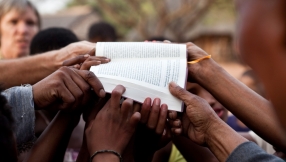
When announcing his ministry Jesus also declares himself different from other Rabbis. In Luke 4 Jesus unrolls the scroll and reads Isaiah 61: 'The Spirit of the Lord is upon me, because he has anointed me to bring good news to the poor. He has sent me to proclaim release to the captives and recovery of sight to the blind to let the oppressed go free, to proclaim the year of the Lord's favour.'
But instead of expanding on the passage and teaching on it, as Rabbi typically would, Jesus sat down and said: 'Today this scripture has been fulfilled in your hearing' (Luke 4:20).
And ultimately by the end of the gospels, when the disciples realise who Jesus really is, they declare him to be much more than their Rabbi.
Matthew 16:15-16 reads: 'Jesus said to them, "But who do you say that I am?" Simon Peter said, "You are the Christ, the Son of the living God."'
And Thomas, when seeing the marks in Jesus' hands, feet and side and realising it was the resurrected Christ famously said: 'My Lord and my God.'
Jesus was a Rabbi, or teacher, to the disciples and remains that today. But he is also so much more.