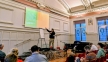
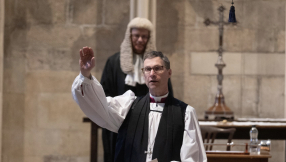
On Sunday evening the Church of England General Synod voted overwhelmingly to support a motion on a new United Nations Treaty on nuclear weapons. At a packed meeting in York 260 delegates voted in favour of the motion, with just 26 against and a further 21 abstentions. You probably won't hear about it much in the press, but this is a big moment for all of us who want to see a world without nuclear weapons.
It may have been the first Synod debate on nuclear weapons in 11 years (since the decision was taken to oppose the replacement of the UK's nuclear weapon system, Trident). Things have changed since then: for a time it seemed that a nuclear exchange between North Korea and the United States was a serious possibility; Iran sought to develop its own bomb (halted by painstaking negotiations) and the UN has agreed a new treaty which will render nuclear weapons illegal.
The Treaty on the Prohibition of Nuclear Weapons was agreed one year ago on Saturday by 122 states at the UN. It is a landmark international agreement that recognises the humanitarian consequences of nuclear weapons and bans them in the same way that chemical and biological weapons have previously been banned.
Civil society played a key part in the process, and the International Campaign for the Abolition of Nuclear Weapons (ICAN) won the Nobel Peace Prize for its efforts on the Treaty. Christian groups have been key in supporting the Treaty and with this move the Church of England joins the Methodists, Baptists, Quakers, United Reformed and Church of Scotland in calling for action on the treaty from the UK government.
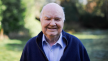
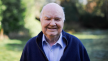
The motion was moved by the bishop of Chelmsford, Stephen Cottrell. He spoke powerfully about the need for states with nuclear weapons to show moral leadership. It can no longer be acceptable for the United Kingdom and others to hold on to nuclear weapons on the grounds of security while arguing that other states should be stopped from developing their own.
The debate itself was conducted in exactly the kind of thoughtful way one would expect. Speakers supporting the motion spoke about the threat nuclear weapons pose to creation, the cost involved and the calling of Christians to seek peace. Those with reservations highlighted the reliance on certain areas of the country on jobs associated with the program and suggested that nuclear weapons had stopped 'cold' wars from turning 'hot' in the past.
Importantly the motion isn't about reviving past arguments over unilateral or multilateral nuclear disarmament. The UK is already committed to a world free of nuclear weapons under the Non-Proliferation Treaty, which is signed 50 years ago. As Bishop Stephen said yesterday, this motion isn't about telling the UK government what to do, it's telling them to stop telling us what they aren't doing.
The motion isn't motivated by trying to score political points or dreaming of some fantasy utopia that doesn't exist. Rather it is a serious attempt to engage the government in one of the most important, and perhaps most contentious issues of our time. There have already been so many near misses with nuclear weapons that we must do all we can to consign them to history.
The motion doesn't tell the government to sign the treaty or to give up nuclear weapons. It simply asks Theresa May to 'respond positively' to the new treaty and bring forward a plan for meeting obligations to negotiate an end to nuclear weapons under the Non-Proliferation Treaty.
We have already seen that it is possible to negotiate on nuclear weapons. The examples of North Korea and Iran show us that deals can be made, even with regimes we wholly oppose. Both of those deals have a long way to run, but that's no excuse to delay talking to other states about global nuclear arsenals.
With this decisive vote the Church of England has joined many other churches in the UK and around the world in calling for action on nuclear weapons. History is full of examples of Christians making a real difference to society when they speak with one clear voice for peace and justice. Let's pray that this will be another example.
Russell Whiting is development manager for the Christian Campaign for Nuclear Disarmament. Follow him on Twitter @Russell_Whiting