WCC Inter-Religious Dialogue Day 3 Resolves Christian-Muslim Tensions
Entering the third day of the "Critical Moment in Inter-religious Dialogue" conference sponsored by the World Council of Churches (WCC) in Geneva, the leaders from the 10 world religions today focused on a more sensitive topic - the growing Christian-Muslim tensions across the world.
Leaders from Islam and Christianity have acknowledged the widespread misperception about the relationship between the two religions in relation to jihad or crusade as referred by the media. However, new hope has emerged since religious leaders showed their commitments in restoring a common base and working together to respond to the real needs of the people on the world.
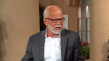
The Geneva-based lecturer in Islamic studies and activist scholar Dr Tariq Ramadan analysed, "We can assess the present situation as a critical moment for all religious communities. There is a great deal of mistrust and suspicion on both sides. Christian-Muslim relations often start from a perspective of competition as both proclaim a universal message."
"But this is a superficial and wrong understanding of religion. We have to change our ways of working together."
The impact of the globally televised 9/11 terrorist attack was said to be a very huge influence to the tensions between Christians and Muslim.
"The problem is that conflict and perceptions are being globalised like everything else," says Dr Tarek Mitri, a Lebanese Christian sociologist and specialist on the Islamic world, who has now moved from his responsibility for inter-religious dialogue in the WCC to join the Lebanese transitional government.
"In the Muslim world, ideological thought patterns represent the West as selfish, materialistic and dominating. In the West, the equivalent thought patterns perceive Islam as irrational, fanatical and expansionist," he underlines.
Mohammad Ali Abtahi, former vice-president of Iran, yet suggested that the power of communication can also put positive pressure on religious leaders if it is applied appropriately.
The conference participants believe that they should recognise their shared basis and interests between the two religions.
Mitri says, "By applying principles of peace, justice and reconciliation, rooted in Islamic and Christian beliefs, as a basis for critical engagement, energies can be turned to a common search for human well-being, dignity and peace."
Dr Tariq Ramadan urged both religions to work together to respond to the real needs of the people, "Even in the West, there is a spiritual famine. We need to move towards a dynamic process relying on local people and communities, which looks at the transmission of values in our societies. It is not simply about a return to dogmatic religion occupying the public sphere, but about a transversal connection of values, ethics and knowledge. The question is, what kind of ethics can we promote based on universal values in response to social problems?"
He further pointed out that inter-religious dialogue has usually focused on theological or socio-political issues, "Something new is needed. It is now our common challenge to connect our spiritual teachings with our realities...We must be less theoretical and more practical in the way we are facing the world."