
To achieve reconciliation takes nothing less than the transformation of society, the World Council of Churches (WCC) general secretary Rev Dr Samuel Kobia said in Managua, during a 2-5 November visit to Nicaragua.
Kobia and a small ecumenical delegation combined a visit by the WCC general secretary to the Council's member churches in Nicaragua with an ecumenical solidarity visit within the framework of the Living Letters initiative of the Decade to Overcome Violence.
The visit took place in midst of growing tensions and sporadic violence as municipal elections were coming closer and, in an atmosphere of high political polarisation, were seen as a virtual referendum about the ruling Sandinista party. The ecumenical delegation heard concerns from Nicaraguan church leaders and representatives of ecumenical organizations about the need for peace and reconciliation.
Preaching at ecumenical services in the capital city Managua and in Puerto Cabezas, on the Caribbean Sea coast, Kobia stressed the Nicaraguan churches' ministry of reconciliation in the face of a history marked by centuries of "violence and wounds" - from the Spanish colonial rule to the "so called 'low-intensity conflict' during the 1980's" through the Somoza dictatorship and the struggle for liberation from it.
"Costly reconciliation will be achieved if and when psychological, social and political transformation of a society materialises," Kobia said. As opposed to "cheap reconciliation", costly reconciliation "encompasses constructive relationships, forgiveness and justice", he added.
While forgiveness entails "unburdening the past in order to inaugurate less painful relationships in the future", justice needs to go beyond the punitive form provided by the legal system, to include "restorative justice," the only way to "deal satisfactorily with guilt and victimisation".
The programme of the ecumenical visit included a theological forum on ecumenism and overcoming violence in Central America, ecumenical celebrations and meetings with church leaders, ecumenical organisations and representatives of civil society and government.
In Managua, Kobia was presented with the Martin Luther King Order of Peace awarded by the Martin Luther King Institute of the Polytechnic University of Nicaragua.
"Religion and faith can be powerful forces of healing and reconciliation in this world," said Kobia in a lecture at the university on that occasion. "If religious intolerance has initiated conflict throughout history, interfaith dialogue is today serving as a foundation on which to ease tensions and promote peaceful co-existence, even in areas plagued by conflict."
The Martin Luther King Institute, which this year celebrates its 15th anniversary, played an instrumental role in the process that led to the United Nations General Assembly proclaiming 2009 the International Year of Reconciliation.
The WCC general secretary was declared guest of honour and presented with the keys of the city by Managua's mayor Dionisio Marenco.
The Living Letters delegation was formed by Noemí Espinoza from the Christian Reformed Church of Honduras, who is the vice moderator of the WCC's Commission of the Churches on International Affairs, and Ashley Hodgson from the Moravian Church in Nicaragua. He is a member of the international reference group for the WCC's Decade to Overcome Violence.
Until 2010, several Living Letters visits take place each year throughout the world in the context of the WCC's Decade to Overcome Violence in order to prepare for the International Ecumenical Peace Convocation which will take place in Jamaica in May 2011.




-

The dire American political situation: a brief overview for faithful Christians in Britain
-
Conversion therapy ban supporters want prayer to be criminalised - this must not be allowed
-

Why the US election results do not bode well for America
-
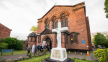
Police appeal for witnesses after head smashed off Jesus statue at church war memorial
-

Archaeologists may have discovered identity of mystery skeleton in Westminster Abbey
-

Are we seeing the end of Western civilisation?
Most Popular
News
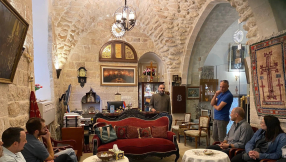
‘Major achievement’ hailed as Israeli officials step in to stop anti-Christian harassment
Harassment against Christian is sometimes justified by appeals to the Jewish religion.

What do Christian young women and men need to know about the opposite sex and themselves?
The first thing that Christian young women and men need to know is that the Bible is the operating manual for humans.
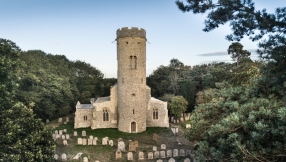
Saxon church saved from Historic England’s ‘at risk’ register after extensive repairs
Historic England has added 197 sites to its Heritage at Risk Register. However it has also managed to save dozens of buildings, including a 1,000-year-old church.

Trump’s midterm defeat and its implications for Christians on both sides of the Atlantic
America’s power and influence on the world stage, combined with Trump’s unpredictability and volatility, is a worrying mix.





