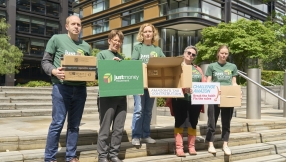
The Government's ban on straws and cotton buds is a "positive step" in tackling the world's plastic crisis but more needs to be done to end the throwaway culture underpinning it, Tearfund has warned.
Environment Secretary Michael Gove confirmed on Wednesday that he was introducing a ban on plastic straws, drinks stirrers, and plastic stemmed cotton buds across England after a consultation showed overwhelming public support for the move.
In the consultation, over 80 per cent of respondents backed a ban on the distribution and sale of plastic straws, while 90 per cent supported a ban on drinks stirrers, and 89 per cent a ban on cotton buds.
The ban is due to come into force in April 2020, with exemptions for people with medical needs or disability.
After this time, restaurants will no longer automatically serve drinks with straws and diners will instead have to request them.
Announcing the ban, Mr Gove said: "Urgent and decisive action is needed to tackle plastic pollution and protect our environment.
"These items are often used for just a few minutes but take hundreds of years to break down, ending up in our seas and oceans and harming precious marine life.
READ MORE: Sir David Attenborough, Tearfund urge Coca-Cola and other big brands to act on plastic pollution
"So today I am taking action to turn the tide on plastic pollution, and ensure we leave our environment in a better state for future generations."
Tearfund, which has made single-use plastic a campaign focus, welcomed the measure but urged the UK to follow the example of the European Union, which has introduced more sweeping bans.
Earlier this month, Tearfund called upon global corporations like Coca-Cola and Nestle to halve the amount of single-use plastic they distribute in developing countries after a study found that in the UK alone, the equivalent of two double-decker buses of plastic waste is thrown away every 30 seconds.
It has cautioned that efforts to move away from plastic use should not lead to an increased reliance on wood and paper products.
"Every 30 seconds, the UK throws away two double-decker busloads of plastic waste," said Joanne Green, senior campaigner on plastics and waste at Tearfund.
She continued, "The EU is banning more items such as plastic cutlery and polystyrene food containers so the UK should seriously consider including these too.
"It's important that banning these items does not result in a greater use of wood and paper products which could fuel deforestation and contribute to climate change as well as biodiversity loss.
"We need to move away from a dependence on disposable products altogether, this will require reimagining our lives, lifestyles and economy."
The Government said that although non-plastic alternatives were readily available, an estimated 95 per cent of straws in use were still plastic, while the cost to local government of cleaning up the effects of littering amounted to millions of pounds every year, with knock-on effects on the tourism and fishing industries.
READ MORE: The problem with plastic and how we can fix it
Despite the widespread use of single-use plastic, the consultation also found that the effect of plastic pollution was worrying 89 per cent of people.
Hugo Tagholm, CEO, Surfers Against Sewage said: "Surfers Against Sewage welcome the ban on plastic straws, stirrers and cotton buds.
"Stopping the production and distribution of these single-use plastic menaces will prevent them from polluting beaches nationwide.
"It's a really positive and bold step in the right direction in the battle against plastic pollution.
"It is also helps further drive plastic-free options and alternatives for the public so they can truly make more sustainable choices in their daily lives."