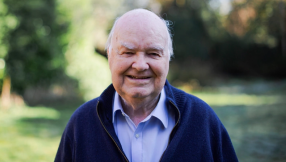
The Episcopal Bishop of California writes on lessons from the wildfires ravaging his state.
As I write, 18 wildfires are burning across my home state of California, having already taken at least eight lives and leaving thousands homeless. These fires, scientists say, are the clearest signal yet of humankind's impact on our climate, and, thus, on God's creation.
As our neighbors suffer, the moral case for climate action has never been clearer. My fellow leaders of faith have been preaching this case with urgency as the wraths of human-caused climate change are increasingly felt across our shared planet. Three years ago, Pope Francis issued an 'urgent challenge to protect our common home' in his stunningly powerful encyclical on the environment, Laudato Si, and he recently warned his Catholic followers that there is 'a real danger that we will leave future generations only rubble, deserts and refuse'.
Adding to this tradition, in June, His All-Holiness, Ecumenical Patriarch Bartholomew convened religious leaders, academics, politicians, and activists in Greece to discuss the challenge of 'Preserving the Planet and Protecting People'. It was a momentous meeting, as faith leaders vowed to work with civil society to ensure the care of God's creation and protect the most vulnerable among us. Weeks later, the harsh physical realities of a warming world arrived in Patriarch Bartholomew's backyard, as wildfires killed dozens and scorched the Attika region not far from where he had hosted the gathering.
These climate catastrophes – the fires in California and Greece, recent deadly heat waves from East Asia to India and Pakistan to Europe, devastating floods in Thailand and Laos – could paralyze us with fear. But what right have we to call ourselves people of faith if we stand by and watch as others suffer, or if we stand idle instead of preventing our own suffering?
I returned home from Greece hopeful, and though that hope was tested by the horrific scenes from the Greek fires and the infernos that still blaze in California, it remains. The hope rests upon the fundamental good sought by the world's spiritual traditions, with the clear direction provided by the global consensus on climate science, and with the efforts of people all over the United States and way beyond – of all political persuasions – who work tirelessly to ensure a safe and stable future for all of humankind.
We cannot wait to practice what we preach. The tragic impacts we suffer today are mere hints of what's to come if we don't change the way we pollute the planet and line the atmosphere with heat-trapping gases. Because 'the world we have received also belongs to those who follow us', as Pope Francis wrote in Laudato Si, we have an added moral responsibility to act on climate, and to do so now. My young parishioners – and all children, and the youth of every species – will endure much worse than even the grave suffering of today if we don't bend the curve of greenhouse gas emissions to a permanent decline by the end of this decade.
Indeed, climate scientists have sounded the alarm that we must view 2020 as a critical target year for peaking the emissions responsible for climate change if we hope to preserve a planet that resembles the one on which all human society, culture, and religion have developed.
Now is the time for even more of us to awaken and connect for the good of all. On our path to transformative change by 2020, the Global Climate Action Summit taking place in San Francisco from September 12-14 could prove a key collective milestone, as it will show how business leaders, politicians, faith leaders, and citizens groups are united on climate action. I urge you to take part by making your own climate commitment, from questioning whether your bank is funding projects that contribute to alleviating our suffering from climate change, to having solar panels installed on your church roof to provide cleaner and cheaper energy so more money can be spent on community projects. Every single one of us has a role to play.
As Pope Francis and His Holiness Ecumenical Patriarch Bartholomew together observed last year in their Message for the World Day of Prayer for Creation, 'There can be no sincere and enduring resolution to the challenge of the ecological crisis and climate change unless the response is concerted and collective, unless the responsibility is shared and accountable, and unless we give priority to solidarity and service.'
I pray that the fires that burn today in my home state will have been contained, with no more lives lost or ruined, well before thousands converge for this summit. But let all of us find solemn motivation by those who perished here – and those still suffering all around the world – and find the urgency to create a future that is safer, more sustainable, and more just for all.
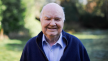
Rt Rev Marc Handley Andrus is Episcopal Bishop of California.