The bigger the better? Not in the case of this 10-foot tall ape called Gigantopithecus

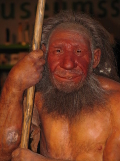
An exhibit of the Gigantopithecus ape at the San Diego Museum of Man. (Wikipedia)

In the animal kingdom, the bigger is not always the better.

The largest ape to have ever existed on Earth, the Gigantopithecus, was a commanding figure when it lived in the tropical forests of what is now southern China about six to nine million years ago.

According to an article published in The National Geographic, the gigantic ape stood as high as 10 feet (3 metres) and weighed up to 1,100 pounds (500 kilos).

The animal's sheer enormity helped it gather fruits to eat easily, and made it less vulnerable to predators.

The size of Gigantopithecus, however, also proved to have been the key to its extinction, a recent study revealed.

Herve Bocherens, a researcher at Tübingen University in Germany, explained at a press conference that Gigantopithecus was just too big and required too much food to survive at the beginning of the last of the Pleistocene ice ages, or some 100,000 years ago.

A comparison graph of a 1.8-meter-tall human male (almost 5' 11") in comparison to Gigantopithecus blacki (left) and G. giganteus (right). (Wikipedia)

"Due to its size, Gigantopithecus presumably depended on a large amount of food. When, during the Pleistocene, more and more forested areas turned into savanna landscapes, there was simply an insufficient food supply for the giant ape," Bocherens explained, as quoted by The National Geographic.

He added that the large ape failed to adapt when there was a shortage of fruits it ate, while other animals changed their diets to grass, roots, and leaves.

Bocherens further posited that the animal would have survived had it been smaller, since it could eat a smaller amount of food.

"Relatives of the giant ape, such as the orangutan, have been able to survive despite their specialisation on a certain habitat," he said.

Aaron Clauset, a computer scientist at the University of Boulder, meanwhile said the study highlighted how size can also have diminishing returns.

"There are short-term advantages that come with being bigger, but it also brings long-term risk," Clauset told The National Geographic.

He added that size can also have an effect on the ability to have offspring.

"As you get bigger, you tend to have fewer children. That means your population tends to be smaller and more sensitive to fluctuations," he explained.


Newsletter Stay up to date with Christian Today
related articles
Mankind\'s cousin: Human-like creatures with big teeth once existed ages ago
Mankind's cousin: Human-like creatures with big teeth once existed ages ago

Mankind's cousin: Human-like creatures with big teeth once existed ages ago

\'Grandmother Fish\': Children\'s book on evolution criticised for deceiving young minds
'Grandmother Fish': Children's book on evolution criticised for deceiving young minds

'Grandmother Fish': Children's book on evolution criticised for deceiving young minds

News
Who represents you and who do you represent?

Scripture repeatedly shows that God works through representatives, and the spiritual consequences of their actions often extend far beyond their individual lives.

‘Faith covenant’ has strengthened cooperation with local authorities, report finds

A “Faith Covenant” 10 years in the making has played a significant role in strengthening cooperation between faith communities and public authorities across the UK, particularly during times of crisis, an independent evaluation has concluded.

Report warns of continued anti-Christian hostility across Europe during April

There were dozens of anti-Christian incidents across Europe in April, including violent attacks during Easter services, church vandalism, desecrations, arson cases, and assaults on clergy and worshippers.

The Bohemian queen who was a catalyst for the English Reformation

11 May 2026 is the 660th anniversary of the birth of Anne of Bohemia, wife of King Richard II of England, who played an important role in the history of the English Bible. This is the story …