
In a meeting with the Health Minister Elena Salgado yesterday, the Catholic Church in Spain revealed a fundamental change in its traditional policy for the prevention of AIDS. Taking a new historical step, it has said it supports the use of condoms to prevent the spread of AIDS.
While most of the AIDS prevention campaigners acknowledge the effectiveness of using condoms in fighting against AIDS, the Catholic Church rebukes that it is just a form of artificial birth control and cannot help avoid the spread of HIV, the virus that causes AIDS.
"Condoms have a place in the global prevention of AIDS," Juan Antonio Martinez Campos, spokesman for the Spanish Bishops Conference, however, said yesterday.
Martinez Campos supports the viewpoint by quoting the result of the recent study by experts in the medical magazine Lancet. Lancet has introduced the "ABC" approach in prevention of AIDS, where 'A' represents abstinence, 'B' represents being faithful to partners and 'C' represents using condoms.
Sources say the "ABC" approach was very successful in Uganda. It has contributed both to Uganda's extraordinary reduction in HIV/AIDS rates and to the country's ability to maintain its reduced rates through the second half of the 1990s.
Martinez added the Church was willing to cooperate and seek understanding with the government to deal with such a grave problem. However, he stressed the Church's commitment to abstinence - even between married couples - and fidelity as the most important means of stopping the epidemic.
In fact, just in November 2004, the Spanish Catholic Church overwhelmingly opposed the Health Ministry's campaign to promote the use of condoms. The leading daily newspaper in Spain El Pais quoted Martinez Campos as saying then that it was "gravely false" to maintain that contraceptives prevented the spread of HIV.
The Catholic Church’s traditional policy on AIDS prevention was condemned by the Spanish government, the World Health Organisation and other organisations involved in fighting AIDS, the papers said.
The Spanish federation president, Beatriz Gimeno commented, "I think it was absolutely inevitable that the Church would change its stance."
According to Spanish government figures there are more than 120,000 adults living with HIV/Aids in Spain, where the disease has caused 42,149 deaths. It is estimated that eight people a day become infected with the virus in Spain.
The Spanish Catholic Church claimed that Christian values are under threat due to the secularised government. While the socialist government has liberated the legislations on homosexual marriage, abortion and divorce, the Catholic Church stepped up its opposition against such agendas which it and other churches consider "unethical".
BBC Correspondents say the compromise made by the Spanish Bishops' Conference on the method of prevention for AIDS could avoid a clash between the Catholic Church and the socialist government.




-

Edinburgh University ends divinity programmes as theology faces a changing future
-

Why the Archbishop of Canterbury’s award controversy matters
-

More than one in four US Protestant churchgoers believe some biblical truths become outdated
-

Catholicism in France has 'collapsed'
-

Christian leaders issue ‘sober and urgent call’ for Western Church to prepare for disruption
-

Australia's anti-therapy laws harm the most vulnerable - Britain should not copy them
Most Popular
News

Active faith linked to happier marriages and lower divorce rates, study finds
People who regularly attend church are more likely to report happy marriages, according to a new report examining the relationship between faith and family life.

Indian churches fearing anti-conversion laws tell non-Christians: enter at your own risk
Churches in Dhamtari, a town in the central Indian state of Chhattisgarh, have put up notices warning non-Christians that they enter at their own risk, weeks after a law against religious conversion came into force in the state.

£1k bursaries to help churches develop youth and community mentoring programmes
Churches across the UK are being offered bursaries to help them establish mentoring programmes aimed at supporting young people and others in their communities.
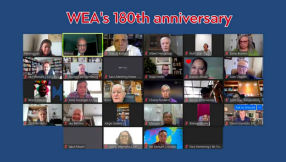
World Evangelical Alliance celebrates 180th anniversary
The World Evangelical Alliance (WEA) has held an online celebration to mark its 180th anniversary. Hundreds of people from more than 22 countries attended, and the event was rebroadcast to accommodate different time zones.








