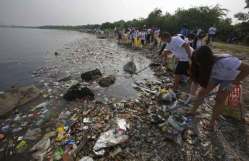
Plastics are indeed very convenient to use due to their durability, but unbeknownst to many, the world population produces an estimated 342 million tons of these non-biodegradable waste products every year. Of this huge number, only 14 percent is recycled, and 8 million tons end up in oceans, threatening the lives of marine plants and animals.
An unlikely solution to reducing this environmental hazard may have been discovered by scientists in Japan: a bacteria that is actually capable of eating plastic.
Kohei Oda, an applied microbiologist at the Kyoto Institute of Technology in Japan and a co-author of the study, explained that this bacteria, which the researchers named Ideonella sakaiensis 201-F6, can particularly break down the plastic called polyethylene terephthalate (PET).
PET is a very durable, colourless plastic usually used in containers for liquids and food.
"The bacterium is the first strain having a potential to degrade PET completely into carbon dioxide and water," Oda said in a CBS News article.
The researchers first collected 250 samples of PET debris from soil and wastewater from a plastic-bottle-recycling site. They then tested a set of bacteria to check which one can best eat the durable plastic.
The scientists found out that the Ideonella bacteria almost break down an entire thin film of PET after six weeks at a temperature of 86 degrees Fahrenheit (30 degrees Celsius).
The researchers also think that a special compound is excreted from the cells' appendages that helped the bacteria dissolve the plastic.
Oda said his team is still studying how to "improve the ability of the microorganisms to degrade." He nevertheless acknowledged that this discovery promises many real-world applications, particularly the one on solving the plastic waste problem.
"We hope that we can develop a technology to handle such a lot of wasted PET," Oda said.