
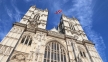
|PIC1|Interest in spirituality may be on the rise, but traditional religions still have a crucial role to play in a genuinely plural society, the Archbishop of Canterbury said in a lecture at Westminster Cathedral last night.
In his lecture entitled "The Spiritual and the Religious: is the territory changing?", Dr Rowan Williams pointed to the likes of Bono who epitomise the growing trend across Britain and large parts of Europe of individuals choosing to identify themselves as 'spiritual but not religious'.
"While the spiritual may be a resource for health, even for 'capital' ... the 'religious' is seen as ambivalent at best, dangerous at worst," the Archbishop conceded, adding that for some it was the fear of compromising individual liberty in favour of a collective mentality that made them shun religion.
He argued, however, that traditional religious commitment goes beyond an experience of the spiritual and is able to furnish society with the resources it needs to be just.
"When the great German philosopher Jurgen Habermas acknowledged some years ago in debate with the then Cardinal Ratzinger that traditional religion offered necessary resources to the construction of social reason and just practice, he was paving the way for some such approach on the part of secular government," he said.
"There is an implicit acknowledgement, it seems, that what religious affiliation of a classical kind offers is not to be reduced just to an enhanced sense of the transcendent or of the interconnection of all things."
Dr Williams argued that although increased spiritual awareness has a place in social and corporate life, it lacks the depth to be able to address aspects of today's global system.
Religion, the Archbishop said, is "one of the most potent allies possible for genuine pluralism - that is, for a social and political culture that is consistently against coercion and institutionalised inequality and is committed to serious public debate about common good".
"Spiritual capital alone, in the sense of a heightened acknowledgement especially among politicians, businessmen and administrators of dimensions to human flourishing beyond profit and material security, is helpful but is not well equipped to ask the most basic questions about the legitimacy of various aspects of the prevailing global system," he continued.
"The traditional forms of religious affiliations, in proposing an 'imagined society', realised in some fashion in the practices of faith, are better resourced for such questions."
Dr Williams said that the challenge for members of religious communities was not only "an assault by principled secularists on all religious belief", but to "learn how to make ourselves look credible and attractive, marketable".
The Archbishop's lecture was the third in the "Faith and Life in Britain" series being held at Westminster Cathedral and organised by the head of the Roman Catholic Church in England and Wales, Cardinal Cormac Murphy-O'Connor.




-

The dire American political situation: a brief overview for faithful Christians in Britain
-

Conversion therapy ban supporters want prayer to be criminalised - this must not be allowed
-

Why the US election results do not bode well for America
-

Police appeal for witnesses after head smashed off Jesus statue at church war memorial
-

Are we seeing the end of Western civilisation?
-
Archaeologists may have discovered identity of mystery skeleton in Westminster Abbey
Most Popular
News
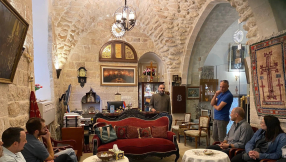
‘Major achievement’ hailed as Israeli officials step in to stop anti-Christian harassment
Harassment against Christian is sometimes justified by appeals to the Jewish religion.

What do Christian young women and men need to know about the opposite sex and themselves?
The first thing that Christian young women and men need to know is that the Bible is the operating manual for humans.
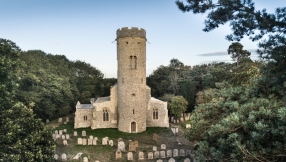
Saxon church saved from Historic England’s ‘at risk’ register after extensive repairs
Historic England has added 197 sites to its Heritage at Risk Register. However it has also managed to save dozens of buildings, including a 1,000-year-old church.
Trump’s midterm defeat and its implications for Christians on both sides of the Atlantic
America’s power and influence on the world stage, combined with Trump’s unpredictability and volatility, is a worrying mix.





