Shakespeare's handwritten plea for humane treatment of refugees to go online

Shakespeare's only surviving play script, in which he begs for the humane treatment of refugees, is to be made available online by the British Library.

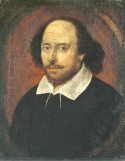
The 'Chandos portrait' of William Shakespeare, housed at the National Portrait Gallery

The writings are an imagined speech by Sir Thomas More, in which he challenges rioters, at a time when anti-immigration feelings were high, due to the hihg number of French Protestants seeking refuge in London.

"It is striking and sad just how relevant it seems to us now considering what is happening in Europe," the library's curator, Zoe Wilcox told the Guardian.

The manuscript is significant, as "all we have other than that are the six authentic Shakespeare signatures, so this is really amazing. It is not even fair copy, it is something he was drafting as he was mid-composition."

The original play, which was never performed, was reworked by several writies, including Shakespeare.

In the speech of Thomas More, he writes: "You'll put down strangers,/ Kill them, cut their throats, possess their houses,/ And lead the majesty of law in lyam/ To slip him like a hound. Alas, alas! Say now the King/ As he is clement if th'offender mourn,/ Should so much come too short of your great trespass/ As but to banish you: whither would you go?/What country, by the nature of your error,/ Should give you harbour? Go you to France or Flanders,/ To any German province, Spain or Portugal,/ Nay, anywhere that not adheres to England:/ Why, you must needs be strangers."

"It is a really stirring piece of rhetoric," Wilcox said.

"At its heart it is really about empathy. More is calling on the crowds to empathise with the immigrants or strangers as they are called in the text. He is asking them to imagine what it would be like if they went to Europe, if they went to Spain or Portugal, they would then be strangers. He is pleading with them against what he calls their 'mountainous inhumanity'."

The manuscript has been conserved and will be on display at the British Library's Shakespeare in 10 Acts exhibition, set to open on April 15. It is one of 300 newly digitised works that seek to engage wider audiences with Shakespeare's works and his influences. The images are available online.

related articles
What did Shakespeare think about religion?

What did Shakespeare think about religion?

Could a church have found Shakespeare's skull? One vicar's foiled attempt to solve the mystery

Could a church have found Shakespeare's skull? One vicar's foiled attempt to solve the mystery

The Stations: Dramatic recreation of Easter devotion depicts refugees\' journey of suffering
The Stations: Dramatic recreation of Easter devotion depicts refugees' journey of suffering

The Stations: Dramatic recreation of Easter devotion depicts refugees' journey of suffering

Global indifference to refugees deserves 'vengeance' from God - Italian cardinal

Global indifference to refugees deserves 'vengeance' from God - Italian cardinal

News
Pope seeks prayers for peace in Christmas Day message

The Pope asked people to pray in particular for the "tormented people of Ukraine" in his Christmas Day 'Urbi et Orbi' message. 

Who was St Stephen and why is he remembered on December 26?

The carol says, “Good King Wenceslas last looked out on the Feast of Stephen.” In many countries, December 26, also known as Boxing Day, is better known as St Stephen’s Day. Stephen was the first Christian martyr. This is the story …

King Charles reflects on pilgrimage, reconciliation and hope in Christmas Day address

King Charles III used his Christmas Day speech to reflect on the significance of pilgrimage as he appealed to the nation "to cherish the values of compassion and reconciliation". 

2 Timothy 3:16 is Logos' Bible verse of the year, Matthew was the most studied book

One of the most-studied Bible verses of the year is from 2 Timothy in the New Testament, according to an analysis of millions of Bible study sessions that tracked how believers worldwide are engaging with Scripture.