
Forum 18 News Service, yesterday revealed the critiques from domestic and international non-governmental organisations and religious groups concerning the latest draft of a proposed law on religious organisations in Serbia.
Compared to the previous draft, the Serbian religion ministry's fourth draft is an improvement, but minority Protestants are worried by the draft's continuing division of religious communities into "traditional" faiths and others with lesser rights.
According to the drafted law, the seven religious organisations recognised as "traditional" and "historical" by the Serbian government are the Serbian Orthodox Church, the Catholic Church, the Islamic Faith Community, the Jewish Religious Community, the Slovak Lutheran Church, the Lutheran Church of Serbia, and the Hungarian Reformed Church. Some minority Protestant Churches, such as the Baptists, Methodists and the Nazarene Christian Community, however are not included.
Article 59 of the latest draft says that "property intended for performing religious services, administrative, educational and humanitarian work, accommodation of clergy and clerics, as well as monasteries, museums, libraries and other cultural institutions belonging to religious organisations are not subject to property tax if recorded as property belonging to a religious organisation".
However, the amendment on the Law on Property Taxes made in late 2004 has in fact forced the minority Protestants out from such tax exemption. According to Article 12, point 3 says, granting such exemption no longer applies to "religious organisations" but only to the seven "traditional" religious communities.
In addition, taxpayers' money is restricted to repair or build places of worship in the northern province of Vojvodina for the seven "traditional" religious faiths, according to Forum 18.
Vidan Hadzi-Vidanovic, a researcher at the Belgrade Centre for Human Rights, told Forum 18 on 21st February in Belgrade that the proposals on taxation of religious property are a breach of "European human rights standards".
In addition, the high threshold - 700 adult members - needed to register a new religious organisation is being widely rebuked, even though the previous draft required 1000 members. Aleksandar Mitrovic, pastor of the Pentecostal Church in Novi Sad told Forum 18, "What if 699 individuals meet for some religious purpose? Are they illegal?"
"To me, this is rather restrictive, and the state can interpret their meetings as illegal and disperse them until they reach 700 members. What if a religious group has a bylaw that they should remain very small and not exceed one hundred people? It is a clear case of discrimination. It seems this law is not giving us rights and freedom of religious expression, but rather is set to restrict us and put us under state control - which could be manipulative," he continued.
Hadzi-Vidanovic added that the congregations are required to give their personal ID numbers and home addresses at the registration. Again, he pointed out that no one should have to tell the state what and why they believe, according to various international human and religious rights declarations.
The Adventist Church, the Roman and Greek Catholic churches, the human rights officer from the United States embassy, Laura Luftig and several other minority Protestant churches were in fact involved in the latest draft of religious law with officials from Serbia and Montenegro, according to Forum 18.
Miodrag Zivanovic, president of the Adventists' South-East European Union admitted that more than half the earlier objections have been resolved in this draft. But he complains that still the Constitution and the draft law have not proclaimed all religious communities as equal as the Serbian Religion Minister Milan Radulovic pledged.
"With the proposed version of this law the state is guaranteeing to the churches and religious communities their autonomy, respecting their bylaws, financial assistance and also other necessary aspects in support of their spiritual mission," Serbian minister Radulovic was quoted by the Belgrade daily Danas on 2nd February.
Serbia has not had a law on religious communities since 1993 and attempts to draft a new law have been controversial. Serbian Religion Minister Milan Radulovic once argued that no religious law is a "dangerous legal void", but he fails to be aware that some European countries, such as the Republic of Ireland, have never had a religion law and have no plans to introduce such a law.
A delegation of the Conference of European Churches (CEC) visited Serbia and Kosovo last week, and also expressed their concern that Baptists and Methodists are not being recognised as 'traditional church' as they met Radulovic.



-

Edinburgh University ends divinity programmes as theology faces a changing future
-

Why the Archbishop of Canterbury’s award controversy matters
-

More than one in four US Protestant churchgoers believe some biblical truths become outdated
-

Catholicism in France has 'collapsed'
-

Christian leaders issue ‘sober and urgent call’ for Western Church to prepare for disruption
-

Australia's anti-therapy laws harm the most vulnerable - Britain should not copy them
Most Popular
News

Active faith linked to happier marriages and lower divorce rates, study finds
People who regularly attend church are more likely to report happy marriages, according to a new report examining the relationship between faith and family life.
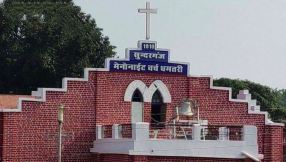
Indian churches fearing anti-conversion laws tell non-Christians: enter at your own risk
Churches in Dhamtari, a town in the central Indian state of Chhattisgarh, have put up notices warning non-Christians that they enter at their own risk, weeks after a law against religious conversion came into force in the state.

£1k bursaries to help churches develop youth and community mentoring programmes
Churches across the UK are being offered bursaries to help them establish mentoring programmes aimed at supporting young people and others in their communities.
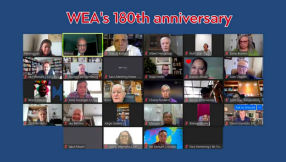
World Evangelical Alliance celebrates 180th anniversary
The World Evangelical Alliance (WEA) has held an online celebration to mark its 180th anniversary. Hundreds of people from more than 22 countries attended, and the event was rebroadcast to accommodate different time zones.








