Religion Gives Brain a Rewarding Experience €” Just Like Listening to Rock and Roll Music, Study Shows

What do taking drugs, engaging in gambling, having sex and listening to rock and roll have in common with going to church? These activities may appear very diametrically opposed at first glance, but a recent study showed how they are linked: They all give the brain a rewarding experience.

Researchers from the University of Utah's School of Medicine recently sought to determine how spiritual feelings affect brain networks through the so-called "Religious Brain Project," The Daily Mail reported.

They focused on a particular group: devout followers of The Church of Jesus Christ of Latter-Day Saints. The researchers performed functional magnetic resonance imaging (fMRI) scans on 19 young adult church members while the volunteers performed four tasks to try and evoke spiritual feelings, including watching videos of biblical scenes and reading of familiar passages from The Book of Mormon.

The participants said they felt at peace and warm inside—some were even in tears—while reading biblical quotations.

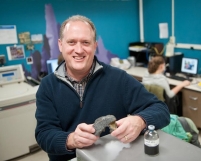
Lead author Michael Ferguson, a bioengineering graduate student at the University of Utah, said the fMRI scans showed the participants' brains being stimulated, particularly the part associated with processing reward, throughout the experiment.

It should be noted that this is the same part of the brain that is stimulated when taking some illegal drugs and doing some activities like listening to rock and roll music, and having sex. It is also the section of the human mind associated with addiction.

"When our study participants were instructed to think about a saviour, about being with their families for eternity, about their heavenly rewards, their brains and bodies physically responded," Ferguson told The Daily Mail.

Aside from their brains "lighting up," the participants were also observed to have experienced faster heart beats and heavier breathing during the experiment—proof that they were having "peak" feelings.

The medial prefrontal cortex part of their brains, responsible for moral judgement and reasoning, was also found to have been stimulated as they engaged in religious activities.

related articles
Science and religion are friends in the quest for truth - Polkinghorne

Science and religion are friends in the quest for truth - Polkinghorne

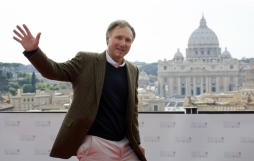
Science and religion tell the same story, says Da Vinci Code author Dan Brown

Science and religion tell the same story, says Da Vinci Code author Dan Brown

Science vs religion debate is \'conflict within religion\' over how to view science, says geologist
Science vs religion debate is 'conflict within religion' over how to view science, says geologist

Science vs religion debate is 'conflict within religion' over how to view science, says geologist

More non-religious people believe in conflict between faith and science than religious people, Pew survey shows

More non-religious people believe in conflict between faith and science than religious people, Pew survey shows

First global study of religion and science shows that many scientists are religious, dispelling conflict as myth

First global study of religion and science shows that many scientists are religious, dispelling conflict as myth

Religion and science can coexist, giving life greater meaning, Christian scientist says

Religion and science can coexist, giving life greater meaning, Christian scientist says

News
Pope seeks prayers for peace in Christmas Day message

The Pope asked people to pray in particular for the "tormented people of Ukraine" in his Christmas Day 'Urbi et Orbi' message. 

Who was St Stephen and why is he remembered on December 26?

The carol says, “Good King Wenceslas last looked out on the Feast of Stephen.” In many countries, December 26, also known as Boxing Day, is better known as St Stephen’s Day. Stephen was the first Christian martyr. This is the story …

King Charles reflects on pilgrimage, reconciliation and hope in Christmas Day address

King Charles III used his Christmas Day speech to reflect on the significance of pilgrimage as he appealed to the nation "to cherish the values of compassion and reconciliation". 

2 Timothy 3:16 is Logos' Bible verse of the year, Matthew was the most studied book

One of the most-studied Bible verses of the year is from 2 Timothy in the New Testament, according to an analysis of millions of Bible study sessions that tracked how believers worldwide are engaging with Scripture.