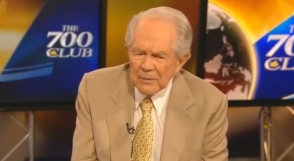
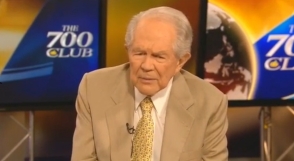
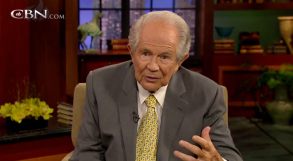
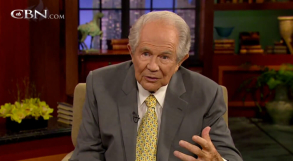
"The 700 Club" host and 1955 Yale Law School graduate Pat Robertson expressed shock when he received in his mail a booklet from his alma mater entitled "Reading the Quran as a Law Book."
The booklet is written by Joseph Lowry, an associate professor from the University of Pennsylvania, according to WND. Lowry claimed in his booklet that Muslims actually have more personal discretion to interpret their holy book.
"The Quran encourages frequent and open-ended reflection (of good works), in addition to promulgating specific rules, adherence to which is a necessary condition for salvation," Lowry said during his Aug. 25 lecture. "This fact, that the Quran seems to promote the idea that there is generally ethical behavior, means we cannot say that the Quran is hyper-legislative and uninterested in broader conceptions of ethics. Indeed, the general character of what we might call 'good works clauses' leads a lot of scope for ethical speculation."
For his part, Robertson said the Quran should not be considered a law book given the fact that the Shariah law "has to do with the subjugation of women. It has to do with a husband having the privilege of beating his wife. It has to do with beheadings."
"This follows Yale's decision to create a Center for Islamic Law and Civilization after a Saudi businessman gave a $10 million donation to the law school," Robertson revealed. "The dean says, and I quote, 'Islamic law has a long and proud tradition, which encompasses great intellectual achievements.' He's got to be kidding! This is Yale Law School. They're in the tank to the Saudis!"
Meanwhile, Dani Sleiman, an expert in Islamic law, disagrees with Lowry's view. Sleiman believes that the laws of Quran are not optional to believers.
"The Quran is the solid ground, the foundation upon which every Muslim follows," Sleiman said. "There is no such thing as figuratively or optional. They have to follow the commandments of the Quran, so I'm really not sure what he's basing it on. I read his book and most of his descriptions were of suggestions. He's using terms like 'suggested' and 'great unknown' and 'no real evidence' and 'assume.' He's trying to draw a theory. He's trying to somehow dig out of it a way to show that the Quran has some peaceful verses."