Pope Francis has defended his strategy of avoiding the term 'Rohingya' in Myanmar, saying he believed he got his message across to both the civilian and military leadership without shutting down dialogue.
Speaking to reporters aboard the plane returning to Rome from Bangladesh, the pontiff also indicated that he had been firm with Myanmar's military leaders in private meetings about the need for them to respect the rights of Rohingya refugees.
He also disclosed that he cried when he met a group of Rohingya refugees on Friday in Bangladesh, where he defended their rights by name in an emotional meeting.
'For me, the most important thing is that message gets through, to try to say things one step at a time and listen to the responses,' he said.
'I knew that if in the official speeches I would have used that word, they would have closed the door in our faces. But (in public) I described situations, rights, said that no one should be excluded, (the right to) citizenship, in order to allow myself to go further in the private meetings,' he said.
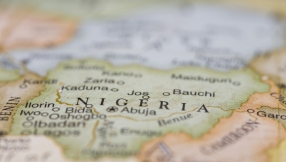
Francis did not use the word Rohingya in public while on the first leg of the trip in Myanmar. Predominantly Buddhist Myanmar does not recognise the mostly Muslim Rohingya as an ethnic group with its own identity but as illegal immigrants from Bangladesh.
Local Roman Catholic Church authorities had advised him not to say it because it could spark a backlash against Christians and other minority groups.
The pope met Myanmar's military leaders privately on Monday, shortly after his arrival in the nation's biggest city, Yangon.
The meeting had been scheduled for Thursday morning but the military pointedly asked at the last minute that it be pushed forward. The result was they saw the pope before the civilian leaders instead of the other way around, as had been planned.
'It was a good conversation and the truth was non-negotiable,' he said of his meeting with the military leaders.
The latest exodus from Myanmar to Bangladesh of about 625,000 people followed a Myanmar military crackdown in response to Rohingya militant attacks on an army base and police posts on August 25.
Refugees have said scores of Rohingya villages were burnt to the ground, people were killed and women were raped. The military have denied accusations of ethnic cleansing by the United States and United Nations.
Asked if he used the word Rohingya during the private meeting with the military chiefs, the pope said: 'I used words in order to arrive at the message and when I saw that the message had arrived, I dared to say everything that I wanted say'.
He then gave a reporter a mischievous grin and ended his answer with the Latin phrase 'Intelligenti Pauca,' which means 'Few words are enough for those who understand,' strongly hinting that he had used the word the military detests while in their presence.
Human rights groups have criticised the country's de facto civilian leader, Aung San Suu Kyi, a Nobel Peace Prize winner who was under house arrest for a total of 15 years before the 2015 elections, for not taking a stand against the generals.
But Francis, who met with her privately on Tuesday, appeared to give her the benefit of the doubt because of her delicate relationship with the generals who were once her jailers.
'Myanmar is a nation that is growing politically, in transition,' Francis said in response to a question about Suu Kyi and budding democracy in Myanmar.
'So things have to be viewed through this lens. Myanmar has to be able to look forward to the building of the country.'
On Friday in the Bangladeshi capital, Dhaka, Francis held an emotional encounter with Muslim Rohingya refugees from Myanmar and then used the word Rohingya for the first time on the trip, although he had defended them by name twice from the Vatican earlier this year.
He told the crowd where the Rohingya were that God's presence was within them and they should be respected.
'I was crying and tried to hide it,' Francis said on the plane, recounting how moved he felt when the refugees recounted their ordeals to him.