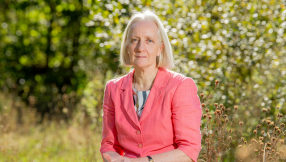
If Brexit turns out badly, it is poor people and British business that will suffer, the Bishop of Leeds has said.
Writing on his blog, Bishop Nick Baines warned the prospects for the British economy were far worse than Nissan pulling out of manufacturing cars in Sunderland and that there were instead widespread concerns among corporate executives that the country was 'toxic' as far as investment was concerned.
He said that those who were prominent in the Brexit process had shown 'that we are a people who are limited in our insight, still maintain dreams of empire, cannot face reality, like to hear what we want to hear (regardless of facts), and cannot be trusted to be competence [SIC]'.
EU counterparts, he continued, had long got over their shock at Britain's decision to leave the EU and were 'now incredulous about our sheer incompetence as a parliamentary democracy'.
While he said he could understand the ideological commitment to leaving the EU, including questions over sovereignty, EU values and the 'bureaucratic machine in Brussels and Strasbourg', he said that it was 'both ridiculous and dangerous' to want to leave the EU without paying attention to how to do it and the cost of doing so.
'So, we see rich and powerful people leading the charge, making promises to which they will not be held, and knowing that they will not suffer at all if it all goes wrong for the UK,' he said.
'Poor people in challenging communities will pay the price – as they have been doing during the so-called 'austerity years' – and the powerful will exercise their power by maximising and protecting their own benefits ... all while blaming everyone else for the ills that follow. We can't all take our businesses to Singapore or Ireland,' he said.
He continued, 'Brexit will bring disillusionment – probably on all sides. Brexit won't lead to economic or social nirvana for Leavers, and Remainers will continue to resist its consequences.
'Just as Faragistes never accepted the decision to join (what became) the EU, so many will immediately start the campaign to rejoin the EU one day. Brexit has not, could not and will not resolve the issue on these islands.
'But, it has exposed our deeper divisions (many of which have nothing whatsoever to do with Brexit or the EU), the poverty of our political culture (how can Labour still be six points behind the Tories in today's polling?), the weakness of our national character, and our willingness to tell, hear and believe lies.'
Prime Minister Theresa May will be travelling to Brussels on Thursday in a bid to renegotiate her Brexit deal, including changes to the way the Irish backstop operates.
Her return to Brussels is being made in spite of EU leaders insisting that there is no renegotiation to be had on the withdrawal agreement.
May is to meet European Commission Jean-Claude Juncker in the morning, followed by a meeting with the president of the European Council Donald Tusk in the afternoon.