
|PIC1|Over half of Britons believe that Jesus Christ rose from the dead, according to new research published over the weekend by Theos, the public theology think tank.
The publication of the research coincides with the launch of The Passion, the major new drama for Easter on BBC One which begins this Sunday. The series - which unusually deals in detail with Jesus' resurrection - will inevitably raise questions as to whether he really did rise from the dead. The survey suggests that, for the majority of the population, this question has already been answered.
57% of people questioned in the ComRes poll said they believe that Jesus was executed by crucifixion, buried and rose from the dead, with over half of those (30% of the total sample) accepting the traditional Christian belief in the bodily resurrection of Christ and the rest (27%) believing that Jesus rose in spirit form.
This widespread belief clearly informs people's more general attitude to life after death. Over half of people said they believe in some kind of existence after death, although most of those (44% of the total) believe that 'your spirit lives on after death'. Only 9% said they believe in a personal physical resurrection.
The Theos research also examined who people thought Jesus was. Two in five (40%) said they believe that Jesus was the son of God and nearly half (47%) that he was a holy prophet. When asked whether they thought Jesus was a good man and wise teacher, 66% of people agreed. Only 11% disagreed.
Surprisingly, 13% of people claim that Jesus never existed, despite the fact that respected historians unanimously agree that he did.
On the question of Easter's significance today, 43% of the public believe that the Easter story is about Jesus dying for the sins of the world while only 26% think that the Easter story has no meaning today. Only 1% think the story shows that violence can only be defeated through violence.
The opinions of atheists are especially interesting. 23% of respondents identified themselves as such, but 14% of these think Easter was about Jesus dying for the sins of the world, 12% believe he rose again from the dead, and, remarkably, 7% think he was son of God.
Despite widely reported concerns about the impact of Dan Brown's best selling novel, The Da Vinci Code, only 4% of people said they subscribe to the idea that Jesus did not die but was resuscitated by his disciples.
Commenting on the results of the research, Paul Woolley, Director of Theos said:
"The aim of this project was to examine people's beliefs about the Easter story and the idea of resurrection.
"The fact that over half of Britons believe that Jesus rose from the dead is particularly striking and demonstrates that society is not as 'secular' as we often imagine it to be.
"Britain is arguably becoming more polarised on issues of religious faith given the exact split between people who do and do not believe in life after death.
"The fact that younger people are less clear about what they believe than older generations reflects a more general rejection of the certainties of the past amongst that age group, whether religious or atheistic.
"It is interesting that only 9% of all people and 42% of church-going Christians believe in a personal physical resurrection after death given the centrality of this belief in Christianity since its conception. The belief that after death the soul escapes to heaven is shaped by Plato rather than the Bible."
The Rt. Rev Tom Wright, Bishop of Durham, added: "The results show a healthy number of people who do still believe in what the New Testament teaches both about Jesus and about their own ultimate future, but also a fair amount of predictable confusion about what 'resurrection' itself actually is.
"'Resurrection' isn't a fancy way of saying 'life after death'; it's a way of talking about a further stage, life after 'life after death'. What the survey does show, though, is that the great majority of people still clearly care about Jesus and regard him highly. It would have been much more depressing if most of them had said 'don't know, don't care'!"




-

The dire American political situation: a brief overview for faithful Christians in Britain
-

Conversion therapy ban supporters want prayer to be criminalised - this must not be allowed
-

Why the US election results do not bode well for America
-

Police appeal for witnesses after head smashed off Jesus statue at church war memorial
-

Are we seeing the end of Western civilisation?
-

Archaeologists may have discovered identity of mystery skeleton in Westminster Abbey
Most Popular
News

‘Major achievement’ hailed as Israeli officials step in to stop anti-Christian harassment
Harassment against Christian is sometimes justified by appeals to the Jewish religion.

What do Christian young women and men need to know about the opposite sex and themselves?
The first thing that Christian young women and men need to know is that the Bible is the operating manual for humans.
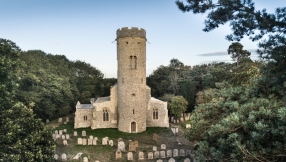
Saxon church saved from Historic England’s ‘at risk’ register after extensive repairs
Historic England has added 197 sites to its Heritage at Risk Register. However it has also managed to save dozens of buildings, including a 1,000-year-old church.

Trump’s midterm defeat and its implications for Christians on both sides of the Atlantic
America’s power and influence on the world stage, combined with Trump’s unpredictability and volatility, is a worrying mix.





