
Democratic presidential candidate Barack Obama waded into controversy on Thursday over his plans to withdraw U.S. combat troops from Iraq, first saying he might "refine" his views but later declaring his stance had remained unchanged for more than a year.
Obama was forced to call reporters back for a second news conference in Fargo, North Dakota, after he initially left open the possibility of revising his 16-month timetable for pulling U.S. combat forces from Iraq.
"Let me be as clear as I can be. I intend to end this war. My first day in office I will bring the joint chiefs of staff in and I will give them a new mission and that is to end this war," Obama told reporters in his second news conference.
But he added: "I would be a poor commander in chief if I didn't take facts on the ground into account."
At an earlier news conference, the Illinois senator had said he could "refine" his stance after he visits Iraq.
Obama, an early opponent of the war who made his stance a centrepiece of his Democratic presidential campaign, said he would not support a long-term U.S. presence in Iraq but wanted to ensure any troop withdrawal was orderly and safe.
"I've always said I would listen to commanders on the ground. I've always said the pace of withdrawal would be dictated by the safety and security of our troops and the need to maintain stability," he told reporters on arrival in North Dakota.
"That assessment has not changed, and when I have a chance to meet with some of the commanders on the ground I'm sure I'll have more information and will continue to refine my policies."
After heavy criticism from his Republican presidential opponent John McCain, Obama said he would visit Iraq and Afghanistan later this summer. It will be his second visit to Iraq.
McCain, an Arizona senator, is a staunch advocate of the current U.S. strategy in Iraq and the issue is certain to be central to their November election battle for the White House.
REPUBLICANS POUNCE
Obama said McCain's campaign had "primed the pump" to convince reporters he was going to change his position. McCain's campaign has inundated reporters with e-mails suggesting Obama was prepared to shift his stance.
Republicans quickly pounced on his initial comments.
"There appears to be no issue that Barack Obama is not willing to reverse himself on for the sake of political expedience," said Alex Conant, a Republican National Committee spokesman.
Obama said his plan for withdrawing one or two combat brigades a month from Iraq after he takes office always depended on conditions on the ground.
"I'm going to continue to gather information to find out whether those conditions still hold," he said. "My guiding approach continues to be that we've got to make sure our troops are safe and Iraq is stable."
As Obama spoke, two of his foreign policy advisors told reporters in a conference call the current U.S. strategy in Iraq was allowing the security situation in Afghanistan to worsen and must be changed.
The advisors, Susan Rice and Sarah Seward, said they believed the 16-month time frame for a U.S. troop withdrawal in Iraq was still achievable.
Rice said Obama remained committed to a "responsible, careful redeployment of U.S. forces from Iraq" and to starting it "from the early days of his administration."
"And the best advice, military advice, that he's received has been that a responsible pace is one to two combat brigades a month," she said.
For security reasons, Obama has not announced the date of his Iraq trip. He will be part of a congressional delegation and will not take reporters with him.
"My job is to make sure that the strategic issues that we face . are all taken into account and dealt with in a way that enhances America's national security interests over the long term," Obama said.


-

The dire American political situation: a brief overview for faithful Christians in Britain
-
Conversion therapy ban supporters want prayer to be criminalised - this must not be allowed
-
Why the US election results do not bode well for America
-
Police appeal for witnesses after head smashed off Jesus statue at church war memorial
-
Archaeologists may have discovered identity of mystery skeleton in Westminster Abbey
-
Are we seeing the end of Western civilisation?
Most Popular
related articles
Obama and Clinton embrace in Unity show
Democrats Barack Obama and Hillary Clinton joined forces at a carefully staged campaign rally on Friday, promising to bury the grudges from their bruising presidential nominating fight and work together to put Obama in the White House.
Obama courts evangelicals with stress on faith
Democratic presidential candidate Barack Obama promised a more active approach to faith-based social programmes on Tuesday in a bid to bolster his support among evangelical and religious voters.
Obama prying loose evangelicals from Republicans
From his frequent God talk on the campaign trail to his latest proposal to expand aid to faith-based programmes, Democrat Barack Obama is serious and aggressive when it comes to courting faith voters.
Obama's take on Bible continues to raise doubts among conservatives
Several conservative commentators this week defended prominent US evangelical Dr James Dobson after he criticised Democrat Barack Obama's Bible interpretation.
News
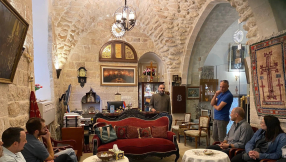
‘Major achievement’ hailed as Israeli officials step in to stop anti-Christian harassment
Harassment against Christian is sometimes justified by appeals to the Jewish religion.

What do Christian young women and men need to know about the opposite sex and themselves?
The first thing that Christian young women and men need to know is that the Bible is the operating manual for humans.
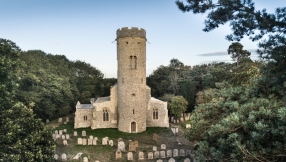
Saxon church saved from Historic England’s ‘at risk’ register after extensive repairs
Historic England has added 197 sites to its Heritage at Risk Register. However it has also managed to save dozens of buildings, including a 1,000-year-old church.
Trump’s midterm defeat and its implications for Christians on both sides of the Atlantic
America’s power and influence on the world stage, combined with Trump’s unpredictability and volatility, is a worrying mix.





