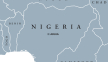
Christian leaders in Nigeria have reacted with profound shock and dismay at the suicide bombings in Gwoza, Borno state on Saturday 29 June, which resulted in the deaths of both Muslims and Christians.
"We are concerned about the resurgence of suicide bombing in our country and the threat it poses to the lives and livelihoods of Nigerians," said Archbishop Daniel Okoh, president of the Christian Association of Nigeria (CAN), in a statement issued on behalf of Nigerian Christian leaders. "This senseless act of violence is a stark reminder of the evil that terrorism represents and the need for collective action to defeat it."
The attacks began with a female suicide bombing at a wedding of a Muslim couple. At least two other suicide bombings followed at different locations, killing more than 30 people and injuring many others, according to Nigerian Vice President Kashim Shetim.
The two subsequent bombings on Saturday targeted a funeral and a hospital in Gwoza, near the border with Cameroon. Although no group has claimed responsibility, Islamic extremist groups Boko Haram and the Islamic State West Africa Province (ISWAP), with which a faction of Boko Haram is aligned, are suspected. These groups have a long and bloody history of violence in the region.
Muslim victims of Saturday's attacks were quickly moved to the town's cemetery for burial, where the second female suicide bomber struck. Christians identified victims from the first blast and buried them on Sunday 30 June.
Boko Haram and ISWAP are driven by a radical Islamist ideology that labels any Muslims who do not share their views as "infidels", targeting them along with Christian believers.
Boko Haram's 15 year long campaign to impose sharia law throughout Nigeria originated in Borno state. This insurgency has displaced more than 2 million people and resulted in over 40,000 deaths.
In the recent attacks, injuries reportedly included skull and limb fractures.
Archbishop Okoh commended security agents for their efforts to combat terrorism. "We encourage them not to relent in their efforts, as every necessary intervention is welcome to prevent a relapse into the dark days of suicide attacks," he said. "We must not let down our guards, as the situation could escalate and affect not only innocent lives but also worship centers and other large gatherings."
The president of the Church of Christ in Nations (COCIN), the Rev. Amos Mohzo, who is from Gwoza County, reported losing church members and relatives in the attacks. He called for the government to take decisive action against terrorists in Nigeria.
Nigeria remains the deadliest country in the world for Christians, with 4,118 people killed for their faith from October 1st, 2022, to September 30th, 2023, according to Open Doors' 2024 World Watch List (WWL) report. The country also recorded the highest number of kidnappings of Christians, with 3,300 incidents.
Additionally, Nigeria ranks third in the number of attacks on churches and other Christian buildings, such as hospitals, schools, and cemeteries, with 750 reported attacks. In the 2024 WWL ranking of countries where it is most difficult to be a Christian, Nigeria was listed as No. 6, maintaining its same position from the previous year.