
New Zealand Church leaders from the Anglican, Baptist, Catholic, Methodist, Presbyterian and Salvation Army churches have lent their support to an "Open Letter" issued by the New Zealand Council of Christian Social Services (NZCCSS) that calls for all political candidates in this year's General Election to "front up to the issue of reducing persistent levels of poverty in Aotearoa New Zealand".
The General Election date was set this week by Prime Minister Helen Clark for Saturday 8 November.
"As made clear in our joint Church leaders' statement in March we believe that issues related to poverty, families and children, older people, housing and essential social services are issues that individual politicians need to take personal leadership on," said Archbishop David Moxon of the Anglican Church.
"There is also a clear expectation that they offer the voting public something significant to say on these issues, that can then be part of a process of a honest and open debate."
The Rev Brian Turner of the Methodist Church, Rodney Macann of the Baptist Churches of New Zealand, and the Rt Rev Pamela Tankersley, of the Presbyterian Church, all described the period before an election as a unique opportunity to intensify discussion about the type of society we live in.
"The effect that poverty has on vulnerable New Zealanders is an issue we need to bring to the fore as part of the call we have as Christians to serve those on the margins of society," said Rev Tankersley.
"A question that we need to ask ourselves is whether we are striving hard enough as a nation to put aside self-interest and to find a stronger collective social conscience in 2008," said Brian Turner.
"When our politicians talk about the policies they plan to introduce we want them to talk about the extent to which those policies can be considered just and compassionate, and we want them to explicitly address the issue of reducing poverty," said Macann.
The Catholic Church of New Zealand will hold its annual Social Justice Week next week with a focus on the latest publication from Caritas, the Catholic social justice agency, entitled 'Look and look again: Poverty in an affluent society'.
Archbishop John Dew of Wellington said, "As made clear in the recent statement by Catholic Bishops we are not about to tell people how to vote, but the way in which individual politicians respond to social justice issues, particularly poverty, is obviously an important signal of their integrity and values."
Garth McKenzie, Salvation Army Commissioner, said that any investment in addressing poverty in Aotearoa New Zealand is a "socially responsible investment".
The Salvation Army in New Zealand has published a number of reflections for this year's election in its publication 'A New Journey', in which it argues that all of society needs to have a concern about the structures which marginalise people and leave them in poverty.
"The message we have for our would-be leaders is that we need to do more as a nation to look for ways of building just structures - locally, nationally and even globally," said McKenzie.
Earlier this year the Church leaders also endorsed the Council's information programme titled 'Aroha tetahi ki tetahi - Let us look after each other'. The programme aims to raise public awareness of social justice and compassion issues and to ensure that the situation of the poor and vulnerable in Aotearoa New Zealand is given a more prominent place on the agenda of public concerns in 2008.
Through the programme thousands of posters and brochures, promoting themes such as treasuring our children and valuing older people, have been distributed to Churches and providers of essential social services throughout New Zealand.
The five "calls" made by the programme are for a more just and compassionate society through the implementation of policies to utilise prosperity to eliminate poverty, support families and communites to nurture and protect children, provide older people with a range of choices for their homes, support and lifestyle, enable access to good, affordable housing for everyone, and support community-based partnership-driven solutions to social issues in the community.
-

Sharing your faith: practical tips for evangelism
-

‘The UK is a mission field’ - churches encouraged to embrace cross-cultural mission on their doorstep
-

Hillsong’s Joel Houston opens up about season of 'soul-searching' after difficult few years
-

The Conversion Practices Bill is weaponised vagueness
News
-
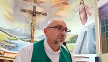
Priest dies after cross falls on him during livestreamed Mass
-

John Lennox urges Christians to overcome fear of sharing their faith
-

The Conversion Practices Bill is weaponised vagueness
-

Anti-Christian harassment continues to rise in Jerusalem
-

Hillsong’s Joel Houston opens up about season of 'soul-searching' after difficult few years
-

Christians remember Aberfan disaster 60 years on
Most Popular
News
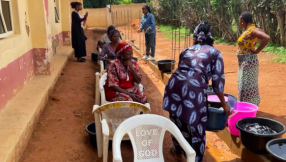
Christian widows in Nigeria hold fast to faith as they rebuild lives after violence
Hundreds of Christian widows in Nigeria’s Plateau State are putting their lives back together after losing husbands, homes and livelihoods to violence.

8 killed in attack on church in Jordan
In response to the shooting, Church leaders vowed that Christians will not be driven from their homeland.
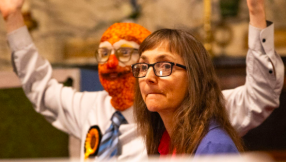
The Christian candidate who lost the election but won my respect
Helen Spiby-Vann secured just 63 votes in the Holborn and St Pancras by-election, but her campaign made me reconsider the value of an explicitly Christian voice in politics, writes Christian Hacking.
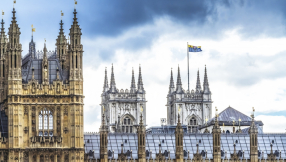
Can we afford the society we have created?
Is spending spiralling out of control? Should the state be doing everything we expect of it, or can we simply no longer afford the society we have created?





