
|PIC1|WASHINGTON - Some missionaries are being killed while distributing emergency relief items because of a lack of security training, informed a security consultant who works with World Vision.
During a presentation this past week for professionals working in conflict and disaster zones in dangerous regions, Joe Fifield - who specializes in anti-terrorism operations, mountain and jungle survival, and disasters - spoke about the complicated process involved in disaster response and how people with "good intentions" but without proper training are sometimes killed while working in high-security risk areas.
"A lot of times in the mission communities don't have the structure, resources and funding; so quite often they are on their own," said Fifield during an interview after his presentation. "And again, even with the best intentions and a noble motivation they should look at the reality."
The former British Army Commando said one of the common discussion topics for faith-based NGOs (non-governmental organizations) is about what is God's responsibility for an aid worker's safety and what is their own.
"It is very interesting because everyone has their views and their commitments to faith," said Fifield, who describes himself as a non-practicing Christian. He said the situation can sometimes get "scary" when someone leaves everything to God and does not take any precaution or make efforts to maintain their safety.
As example he told about missionaries who were handing out Bibles while distributing aid in Sri Lanka during the aftermath of the tsunami.
Sri Lanka is a heavily Buddhist country with Buddhist extremists that have been reported of burning and throwing grenades at churches.
He said that because the missionaries did not receive proper security training - as far as Fifield knows, the missionaries were individuals and did not belong to any organization - they put themselves in serious danger by openly distributing Bibles and were killed as a result.
"Potentially doing something like that - not taking into consideration the cultural issues - can be deadly," said Fifield. "Because ignorance of local laws and custom can get you into hot water and that is exactly what happened."
He noted that World Vision has local staff in over 100 countries that can inform aid workers about the dress code, culture, custom, and food in each country prior to distribution work.
Recently, there have been several incidents of deaths and abductions of American missionaries working in high-risk areas.
In February, a missionary working in Haiti was kidnapped at gunpoint and later released after the United Nations police became involved in the conflict.
Kidnapping for ransom is common in Haiti and is orchestrated both by street gangs and corrupt police. In particular, foreign missionaries working with little security and in areas without a strong police presence are increasingly being targeted, noted The Associated Press.
Also in February, Carol Briggs, a missionary working in Kenya, had one of her eyes removed after being shot in the mouth by gangsters. The missionary, who was a medical volunteer helping HIV orphans, was traveling with a prominent African AIDS researcher who was killed during the event.
Earlier in January, a retired Presbyterian Church (U.S.A.) missionary died in a carjacking incident that also took place in Kenya. The missionary, Lois Anderson, and her daughter were inside an American embassy vehicle when "thugs" ordered them to get out of the car and shot them.
The incident is considered a "random attack" and not one aimed at Americans. Lois and her husband had served for more than 40 years in Sudan and Kenya as missionaries and were visiting their daughter in Kenya when the incident took place.
Fifield said that World Vision had lost one person in Iraq before it pulled out aid from the country. He emphasized that missionaries and people with good intentions to help those suffering from a disaster should be aware of activities that would heighten their security risks and get training from experts on how to work in that region.
-

Christian advent calendar sales 'soar' after online storm with Meghan Markle fans
-

Immigration fears shape views of Britishness and Christianity, report finds
-

Christian teacher challenges dismissal after sharing pro-life views in class
-

US evangelicals more religious than other Christians, but still declining
News
-

Televangelist Jim Bakker dies at 86
-

When ‘my truth’ replaces the truth
-

The book that changed Sweden: 500 years of the Swedish New Testament
-

UK Christians unite for nine days of prayer as National Week of Prayer enters third year
-

Christian pro-life volunteer denies five fresh charges in abortion buffer zone case
-

Christian faith seen as ‘significantly more relevant’ to young people than church, new report finds
Most Popular
News

What’s so fascinating about Church of England vicars?
Church of England priest Pippa White has more than 32,000 followers on TikTok, her online posts have been seen by millions, and she has just published a book explaining clerical life for a non-church audience.
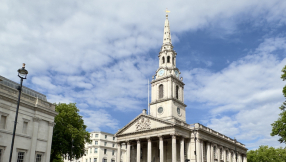
The London church that helped shape a nation: 300 years of St Martin-in-the-Fields
Few parish churches are as famous as St Martin-in-the-Fields in central London. This year, it marks its 300th anniversary. This is the story …
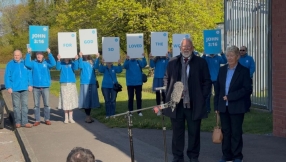
Pastor convicted of breaching abortion buffer zone set for appeal
The pastor delivered a sermon that made no mention of abortion.

Christian advent calendar sales 'soar' after online storm with Meghan Markle fans
The Leprosy Mission reports that sales of its Real Advent Calendar have “soared” following an online blow-up involving Meghan Markle and a pair of Anglican priests.








