The brother of a murdered Christian human rights advocate and government minister in Pakistan has called for an inquiry into the treatment of religious minorities in the country.
In 2008 Shahbaz Bhatti became Pakistan’s Federal Minister for Minority Affairs. He was the only Christian in the cabinet of Prime Minister Yousaf Raza Gilani.
As a minister, Bhatti spoke out in support of Christians attacked in the 2009 Gojra riots and of Asia Bibi, a Christian woman sentenced to death for blasphemy. After a protracted legal battle and many years in prison, Bibi was released and was given asylum in Canada.
Bhatti's championing of the rights of Christians led to ever increasing death threats, threats that eventually came to be realised when he was assassinated in 2011 by the Pakistani Taliban.
Following his assassination, his brother Paul became the Minister of National Harmony and Minority Affairs.
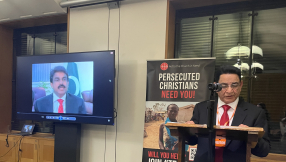
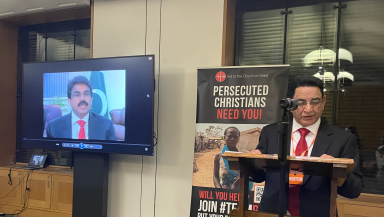
Now Paul Bhatti, speaking to the British Parliament, has told of how the influence of Islamic extremists in Pakistan has only grown and has left religious minorities too afraid to stand up for their rights.
Speaking at the launch of a report on persecuted Christians produced by Catholic charity Aid to the Church in Need (ACN), Paul Bhatti said, “In the years since [Shahbaz Bhatti’s] martyrdom, many human rights and religious freedom advocates have fallen silent out of fear that extremists might target them. As a result, religious minorities have continued to face persecution, including the misuse of blasphemy laws, abductions, forced conversion and forced marriages."
He added, “We urgently need to raise awareness of the reality of persecution of Christians and other religious minorities around the world today.”
Bhatti called for a British parliamentary inquiry into the treatment of religious minorities around the world, led by either the Foreign Affairs Select Committee or the Joint Committee on Human Rights. Bhatti also said the British government should produce a response to any future inquiry.
Also speaking was Dr John Newton, editor of the ACN report, who said, “Religion forms a matrix of different factors including ethnicity, gender and social status that make individuals highly vulnerable to persecution, but the lack of religious literacy in the West means anti-Christian animus is often downplayed or even omitted in favour of others factors.
“I hope this report will inspire us to speak out for those who cannot, to stand with those who endure persecution.”