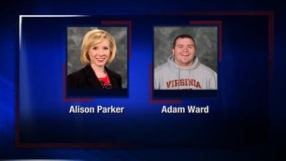
As it happened, I was on early morning website duty today. I wanted to put up a Reuters story about the shooting in Virgina of Alison Parker and Adam Ward in Virginia.
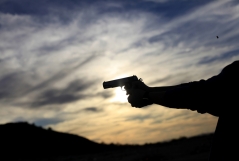
Among the suggested pictures were ones from a video taken by the shooter on his phone showing the gun pointing at Parker. One of them even showed the muzzle flash at the moment of discharge.
Genuinely revolted, I clicked past them and chose another showing their smiling faces from a TV station handout.
So what was it about these pictures that drew from me an instinctive "no"?
Those aren't the only graphic images of the event that have circulated. Neither, of course, are they uniquely dreadful: turn on a news bulletin from Syria, Iraq or South Sudan and it is not long before we feel we have supped full with horrors.
I'm not in principle against showing pictures of violent acts. Sometimes the aftermath of a drone strike or a raid on a village can only honestly be shown complete with corpses.
But two things bother me.
First is the law of diminishing returns. Over the last few decades there has been a progressive anaesthetising of our capacity to be shocked. In the UK – and the US, and many European countries – media watchdogs are fighting a rearguard action against the increasing densensitisation of the public to violence. It takes more to make us react. In many other countries this process is far advanced and there's little that broadcasters won't show.
"But we need to see," is the argument. Why? To make you care? Well, maybe. News organisations and charities alike know that if they can give people a thrill or tug at the heartstrings, viewing figures and donations go up – and what better way than showing you pictures of people in extremis?
I'm not comfortable with that. I think the assumption that we need to see everything, no matter how sick, disgusting and heartbreaking, is flawed. I don't want to join a race to the bottom. Think again about that picture of Alison Parker and ask yourself: why exactly do you want to see a picture of a terrified young woman in the moment she realises she's going to die? What darkness in your soul does that reveal, and are you OK with that?
Second is the nature of this particular crime. The shots that have caused so much outrage were filmed, deliberately, by the perpetrator. He created his own snuff movie and put it online, and now millions of people are going to see it.
We shouldn't be playing his game, any more than we should play Islamic State's game when it puts up videos of people being beheaded or burned alive. That's what these people want. They turn death into entertainment and they make us complicit in their crimes.
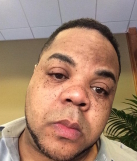
Every time a news outlet puts up a picture from Vester Flanagan's film, he wins. Every time we choose to look at it, he wins. In a spiral of irony, we are helping to create a culture in which murder and movie-making are becoming less and less distinguishable.
The 2008 film Untraceable tells the story of a serial killer who organises gruesome webcam deaths for his victims by making the process dependent on the number of hits his KillWithMe website gets. Appeals to the public to stay off the site just encourage more hits. The public appetite for blood, it appears, is insatiable.
I used to think that was just a good film. Now I worry that it's a prophecy.