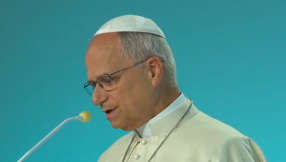
Faith leaders representing the six main religions in India have united in a joint statement condemning hateful political division, state coercion of individuals and violent discrimination against faith groups.
Leaders of the Buddhist, Christian, Hindu, Jain, Muslim and Sikh faiths met in Goa, western India, on April 5 in a gathering addressing national tensions ahead of the country's 2019 general election, according to World Watch Monitor.
In a joint statement, the leaders expressed 'deep worry and concern at the way forces of hate and division are striving to polarise the Indian Polity.
'We are deeply distressed at the communal tensions that we have seen in recent days in West Bengal, Bihar, Rajasthan and other states. We strongly condemn those who are seeking to inject the portion of hatred into our society.'
Non-Hindus have reportedly claimed increasing social discrimination and restriction since the Indian nationalist BJP party won a landslide election victory in 2014.
The statement affirmed the right of every Indian to eat, marry and study as they wish, and to 'practice whatever faith one wishes to profess' free from coercion. It added: 'We take strong exception to anyone taking control of these individual decisions be it on the part of the State or by so called cultural organizations. No one is to be categorized as anti-national or non-patriotic based on his religion, region or belonging to a community.
'We condemn all violence, lynchings and killings and request the authorities to take strong and speedy action against those involved in anti-social acts. We are very concerned about attacks on educational institutions and places of worship. We denounce in unequivocal terms the attacks this week on three Catholic Churches in Rourkela, Onssa at a time when the peaceful Christian Community was celebrating their feast of Joy, Easter.'
The statement denounced mob violence and vigilantism, and lamented the continued oppression of the Dalit caste through India's long-standing caste system.
'We emphasise that the rights of the tribals, the marginalized, the workers, and the poor be upheld and protected,' the statement said.
'We call upon all men and women of goodwill to stand up for social harmony. Our country cannot progress simply with slogans and promises. A nation can progress only when its people live with each other as brothers and sisters, where egoism gives place to selflessness, hate gives way to love, peace replaces violence. We wish to promote the way of love for as Martin Luther King Jr. said, "Darkness cannot drive out darkness, only light can do that. Hate cannot drive out hate. only love can do that."'
The statement's sentiments were echoed in an open letter published April 9, by the National Council of Churches in India. The letter from Bishop Thomas K Oommen, the moderator of the Church of South India, expressed 'the fear my people have under the rule of a Government that has become a nightmare to the poor and the minorities in India.'
It warned against the 'corporate-fascist ideology' of extreme Hindu nationalism, describing 'corruption' as 'a hallmark of this government'.