Tearfund is hoping talks in Dublin this week will lead to a breakthrough in the billions of dollars pledged by world leaders to help poor communities adapt to climate change.
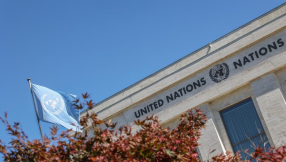
The climate justice talks are being attended by delegates from the UN, Irish parliament and the UK's Department for International Development.
Although in 2009 world leaders pledged an extra $100bn a year from new sources towards climate adaptation, Tearfund's Head of Public Policy, Laura Taylor says little movement has been made in the last four years.
"Bill Gates and others have suggested excellent ways of raising this money but we've yet to see any signs of progress," she said.
Tearfund is a member agency in the IF campaign to end global hunger. From today, IF supporters are encouraged to write to Ed Davey, Secretary of State for Energy and Climate Change, asking him to keep his promise on 'climate cash'.
Tearfund said preventive action had proved to be cost effective. Its own study into adaptation projects in Malawi found that for every $1 invested in helping vulnerable communities to recover quickly from flood or drought, there was $24 of benefit.
Communities in Malawi are having to adjust to dry spells and floods caused by changing rain patterns. As a result harvests are being ruined, compounding the existing hunger problem in Malawi, where an estimated two million people are living without enough food.
Tearfund partner Eagles is helping rural villages adapt by building flood defences, learning new ways of farming and managing their resources better.
Maxwell, chief of a village near Blantyre, Malawi, describes what this means: "This year, we are privileged that we have learnt something about agriculture to make sure that we are helping each other to adopt this method of farming.
"We are encouraging every household to plant improved varieties of sorghum and millet which are early-maturing so they can cope with changes in climate, adapt to the changes that are happening and have enough food."
The $100bn pledged by world leaders would allow similar projects to be replicated in communities already experiencing climate change.
"People are incredibly resilient and resourceful, if we support them they can and will adapt. But they can't do this alone, and they shouldn't have to," says Taylor.
"We celebrated when the UK government kept its promise on overseas aid. Now they need to keep another promise and find the money to deal with the additional burden of climate change.
"Climate finance has been stuck in the doldrums for too long. We hope that Ed Davey will be the wind beneath its sails, bringing a shipping levy one step closer."