
With the rainy season just around the corner, world Vision is warning that children in camps across Haiti are at risk of being infected with serious diseases.
The imminent heavy rains are threatening an increase in malaria, dengue fever and diarrhoea among the camps’ children.
Thousands of people are still living in makeshift camps following the massive earthquake that struck Haiti on 12 January.
World Vision said children, who make up roughly half of Haiti’s population, were already at particular risk in the camps because of crowding, filthy conditions, exposure and a lack of nutritious food.
“When it comes to healthcare, the emergency is most definitely not over,” said World Vision’s Claire Beck in Port-au-Prince.
“Children in Haiti were facing a chronic health emergency even before the quake. This massive disaster has created even greater challenges.
“Now the rains will bring more unsanitary conditions, more mosquitoes, more fevers for children. I’m extremely concerned.”
World Vision is appealing to the Haitian government to save as many lives as possible by continuing its waiver on public hospital and clinic fees, a measure which has proved vital for most Haitians who cannot afford basic medical care. The waiver expires on 12 April, around the start of the rainy season.
“It’s an expense displaced communities are just not in a place to afford right now,” said Beck.
World Vision and other aid agencies have been rushing in the last few weeks to prepare camps in anticipation of the rainy season.
A major task has been the implementation of flood prevention measures to ensure that camps are not deluged with flood water and raw sewage.
In a recent report, World Vision said that recovery efforts needed to focus on reducing the impact of future disasters in Haiti, the poorest country in the world.
It warned that Haiti was at “high risk of impact by natural disasters” and that the threat was compounded by high levels of poverty, social vulnerability and severe environmental degradation. It also called for affected communities to be involved in deciding the direction of the recovery process.
More than 220,000 people died in the January earthquake, including the Archbishop of capital Port-au-Prince Joseph Serge Miot. With much of the city’s cathedral in ruins, the Easter service was held this year in the churchyard. Thousands more celebrated Easter within their camps.
The new Archbishop, Joseph Lafontant, paid tribute to the people of Haiti for coping with the tragedy.
He said: “After the earthquake, the Haitian people had kept their faith.”
-
Are we seeing the end of Western civilisation?
-

The dire American political situation: a brief overview for faithful Christians in Britain
-
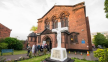
Police appeal for witnesses after head smashed off Jesus statue at church war memorial
-

Poll shows support for conversion therapy ban disappears once people learn its implications
News
-

Former Crowded House pastor and wife charged with rape
-

Enoch Burke accuses Archbishop of remaining 'silent' in school trans dispute
-

The dire American political situation: a brief overview for faithful Christians in Britain
-

Police appeal for witnesses after head smashed off Jesus statue at church war memorial
-

Half of Christian questions on ChatGPT are attempts to understand the Bible
-
Archaeologists may have discovered identity of mystery skeleton in Westminster Abbey
Most Popular
News
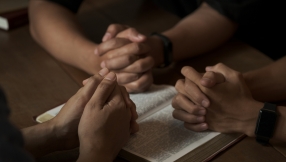
Conversion therapy ban supporters want prayer to be criminalised - this must not be allowed
Christians are already being prosecuted for silent prayer outside abortion clinics. A pernicious law like the one currently being considered in Parliament would only make things worse.
Why the US election results do not bode well for America
Only a return to genuine biblical Christianity can save America from itself.

AI and the Gospel: navigating faith and evangelism in the digital age
As AI changes the way people search for answers, build relationships and explore faith, churches are facing new questions about how to engage with technology without losing the human connection at the heart of the Gospel. Christian Vision’s Heinz Oldewage shares his thoughts.

The three-way squeeze on Christian education
Churches, charitable societies and Christian families created schools because they understood education as the formation of the whole person under God. Now the state behaves as though every educational freedom exists by its permission. It does not.





