
One more unwanted consequence of global warming may be an increase in cases of kidney stones in areas with rising temperatures, U.S. researchers said on Monday.
Kidney stones - excruciatingly painful hard deposits of minerals and salts that can form in the kidneys - tend to be more common in hot climates, with dehydration a key risk factor for the condition.
The researchers used two mathematical models linking temperature to kidney-stone risk in the United States, and found that regions where the condition now is most common will expand in coming decades due to predicted rising temperatures.
They forecast increases of up to 30 percent in kidney stone cases in some areas - meaning millions more people would get the condition. The annual cost in the United States of treating kidney stone cases could increase by 2050 by about $1 billion per year - 25 percent more than current levels, they added.
Kidney stones currently are most common in the southeastern United States, but this "kidney stone belt" is forecast to grow to the northward and westward, the researchers wrote in the journal Proceedings of the National Academy of Sciences.
Other parts of the globe could experience similar trends.
"There's every reason to anticipate that it would be happening worldwide," urologist Dr. Margaret Pearle of the University of Texas Southwestern Medical Center in Dallas, one of the researchers, said in a telephone interview.
Not drinking enough water and other fluids or losing too much fluids through dehydration - more likely in hotter climates - can leave one's urine with higher concentrations of substances that can form kidney stones.
This is just the latest negative health consequence to be predicted due to climate change. Others include an increase in the many diseases spread by mosquitoes and other insects.
In the United States, about 12 percent of men and 7 percent of women experience kidney stone disease at some time.
The fraction of the U.S. population living in high-risk zones for kidney stones could grow from 40 percent in 2000 to 56 percent by 2050 and to 70 percent by 2095 if temperatures rise as predicted, the researchers said.
One of the two models used by the researchers predicted increases by 2050 concentrated in California, Texas, Florida and the East coast. The other model predicted an expanded concentration of cases in a geographic band stretching from Kansas to Kentucky and northern California, they added.




-

The dire American political situation: a brief overview for faithful Christians in Britain
-

Conversion therapy ban supporters want prayer to be criminalised - this must not be allowed
-

Why the US election results do not bode well for America
-

Police appeal for witnesses after head smashed off Jesus statue at church war memorial
-

Archaeologists may have discovered identity of mystery skeleton in Westminster Abbey
-

Are we seeing the end of Western civilisation?
Most Popular
related articles
Midwest floods show signs of global warming
Floods like those that inundated the U.S. Midwest are supposed to occur once every 500 years but this is the second since 1993, suggesting flawed forecasts that do not take global warming into account, conservation experts said on Tuesday.
Study links global warming to more smog
U.S. environmental regulators quietly published a draft study on Thursday that linked global warming to higher levels of smog that could harm human health, a report green groups said stood in contrast to the Bush Administration's slow movement on climate change.
News

‘Major achievement’ hailed as Israeli officials step in to stop anti-Christian harassment
Harassment against Christian is sometimes justified by appeals to the Jewish religion.

What do Christian young women and men need to know about the opposite sex and themselves?
The first thing that Christian young women and men need to know is that the Bible is the operating manual for humans.
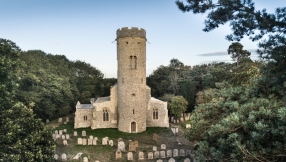
Saxon church saved from Historic England’s ‘at risk’ register after extensive repairs
Historic England has added 197 sites to its Heritage at Risk Register. However it has also managed to save dozens of buildings, including a 1,000-year-old church.

Trump’s midterm defeat and its implications for Christians on both sides of the Atlantic
America’s power and influence on the world stage, combined with Trump’s unpredictability and volatility, is a worrying mix.





