An international charity has committed to reaching 100,000 girls worldwide who are at risk of human trafficking.
One by One announced the pledge to coincide with International Women’s Day on March 8, highlighting the plight of girls who remain vulnerable to human trafficking and modern slavery.
The charity’s Dignity Project, which combines menstrual health support with education on personal safety and trafficking awareness, recently achieved a milestone of reaching 50,000 girls.
The programme, established 10 years ago, distributes reusable sanitary pads, while equipping girls with the knowledge to identify the methods traffickers use to groom and manipulate victims, and build confidence to protect themselves.
The project began after reports of children disappearing close to One By One’s offices in Kenya.
Staff identified a link between school absenteeism caused by period poverty and increased vulnerability to exploitation.
By addressing both issues, the charity says more girls are able to remain in education and avoid dangerous situations.
Since its launch in the UK Parliament, the Dignity Project has been rolled out in 14 countries, among them Brazil, Sierra Leone and India.
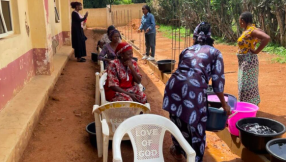
Sessions have taken place in a wide range of settings, from schools and churches to prisons and refugee camps, including programmes for Afghan women displaced by Taliban rule.
Training sessions have also been held in schools across the UK aimed at raising awareness of exploitation and reinforcing the importance of safety, hope and education for girls.
According to the charity, schools in Uganda recorded a 19% rise in attendance after Dignity Project events last year, something campaigners say plays an important role in decreasing the risk of trafficking.
Becky Murray, founder and chief executive of One By One, said International Women’s Day was an opportunity not only to celebrate progress but also to focus on girls who remain unseen.
“Every reusable pad gifted via the Dignity Project and every lesson taught is a step towards breaking the chains of shame, fear and exploitation,” she said.
She added that the organisation hopes to double its impact within the next five years.
“It has taken us 10 years to reach 50,000 girls. Our goal now is to reach 100,000 in half that time,” she stated, thanking the churches, supporters and businesses that have backed the charity’s work.
The charity’s wider work includes rehabilitation and care for survivors of trafficking.
Its Mercy Centre in Uganda provides residential support for trafficked girls aged between 6 and 17, while its King’s Centre in Kenya offers education, welfare assistance and family reintegration programmes.
In Pakistan, One By One also runs outreach initiatives for children working in brick factories and operates a safe house for those rescued from bonded labour.
Mrs Murray has previously presented the campaign against trafficking to international political leaders, including meetings at the White House and 10 Downing Street, and has received support from senior figures such as former UK prime minister Theresa May.
One By One says its long-term aim is to tackle trafficking not only through rescue operations but by preventing exploitation before it begins.
Police officers and community leaders frequently attend the project’s “Dignity Days”, reinforcing the message that girls have the right to safety, education and dignity.
Ms Murray said: “Our message is clear: no price can ever be put on the head of these girls, because the price has already been paid in full by Christ. Each girl is infinitely precious in God’s sight, and we pray they will live in the freedom and worth he has secured for them.
“We have met many girls who have been through horrendous situations – the training shows that their bodies are their own and they can say no.”