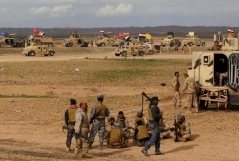
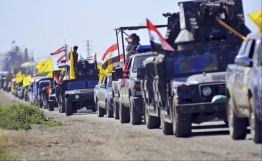
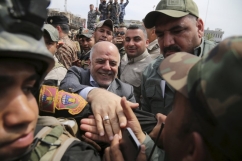
Forensic teams began exhuming the bodies of up to 1,700 people buried in mass graves in Tikrit, northern Iraq, on Monday, after the city was retaken by Iraqi forces last week.
The victims are thought to be the captured soldiers seen marched through the city's streets when Islamic State (ISIS) took control nine months ago.
The 1,686 air force cadets have been registered missing since then, but the search for them may have ended yesterday after the 12 mass grave sites were discovered.
The cadets, who were based at Camp Speicher, a former US base outside Tikrit, are believed to have been killed for following Shia Islam. The few who escaped Tikrit at the time said they were lined up and Shias separated from Sunnis, the Guardian reports.
"We dug up the first mass grave site today. Until now we found at least 20 bodies. Initial indications show indisputably that they were from the Speicher victims," Khalid al-Atbi, an Iraqi health official working with the forensic team sent to Tikrit told Reuters.
According to the Times, the exhumed bodies were little more than skeletons wrapped in rags. As they were removed from the graves, they were covered with the Iraqi flag.
"It was a heartbreaking scene," al-Atbi said. "We couldn't prevent ourselves from breaking down in tears. What savage barbarian could kill 1,700 persons in cold blood?"
It is thought to be one of ISIS' worst atrocities of this kind. In June last year images circulated online of brutal mass killings, and an unverified statement from an ISIS Twitter account reported that all the soldiers had been killed, the Independent reports. A Human Rights Watch report said that based on the initial pictures, it seemed that between 160 and 190 people had been killed.
Outrage at the executions had driven the effort to take bake the strategic city from the militants.
They are still searching for other graves, and the forensic work to identify the bodies could take months – or even years – as a result of Iraq's limited and weakened forensic services.
Only 47 bodies were exhumed on Tuesday, of which 12 were identified. It will be slow work, but it is hoped that the families will finally have an answer, and be given the chance to give their loved ones a proper burial.