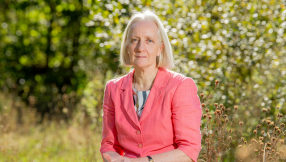
Domestic abuse will only be eradicated if people, including members of faith communities, are able to speak about the issue openly, the Moderator of the Church of Scotland General Assembly has said.
Writing in the Press and Journal, the Rt Rev Susan Brown said that although there were male victims of abuse whose stories needed to be heard, women "carry the brunt of that abuse by far".
"There are children who go to sleep to the sound of their mother being called names, or slapped, or worse," she said.
"There are children growing up who think it is acceptable to treat a woman like a servant because that is what they see, day in and day out."
In addition to overt abuse, she said there could be less obvious forms, such as the "constant undermining of a woman's confidence" and the manipulation and control of her time, how she spent the household money, who she hung out with and the clothes she wore.
A person's individual faith, Mrs Brown continued, could be "twisted to keep a woman subservient".
She said lll faith communities, Christian included, could "collude with the actions of the perpetrator by refusing to listen to the woman".
This was a particular risk if the man was in a position of leadership within the faith community, she warned.
"It could be because the man is seen to be a stalwart of the church or mosque and people find it hard to believe he could be otherwise at home, so they take sides," she said.
In a bid to bring domestic abuse out into the open, the Church of Scotland is asking congregations to speak about the issue more in church and display a poster encouraging victims to speak up "with the assurance that they will be listened to, taken seriously and believed".
Church ministers are also being encouraged to familiarise themselves with their local women's aid or refuges in order to signpost women who come to them for help.
"Everyone is asked simply to listen, without judging," she said.
"Within or beyond the faith communities, if we want people's homes to be places of love and acceptance where adults and children can feel safe, where everyone is treated respectfully and no one feels threatened or anxious, then we have to talk about domestic abuse and stop pretending it doesn't happen in our town, or village, or street.
"We need to educate ourselves to look for the possible signs and we need to be open to starting conversations which might allow others to find the help they need to deal with their aggression if they are the perpetrator.
"Or to escape that aggression if they are the victim so that both are enabled to become happier and healthier human beings."
If you or someone you know are affected by domestic abuse, call the Women's Aid and Refuge 24-hour national helpline on 0808 2000 247.