The idea that someone's mind can live independently of their body, uploaded into another human being or into some form of software, has been around for years. Up to now, though, it's been science fiction. Think Robert Silverberg's To Live Again, in which recorded personalities are transferred into other people; or Arthur C Clarke's The City and the Stars, in which personalities are recorded on a super-computer and uploaded repeatedly to cloned bodies. Avatar is probably the best-known modern example.
It's all been fiction. But now a Russian media mogul has founded the '2045 Initiative' which aims to 'upload' a human consciousness into an online avatar that can survive for eternity.
Dmitry Itskov features in a BBC Horizon documentary to be broadcast on Wednesday, March 16. Noting that "if there is no immortality technology, I'll be dead in the next 35 years," he says: "The ultimate goal of my plan is to transfer someone's personality into the new artificial carrier. Different scientists call it uploading or they call it mind transfer. I prefer to call it personality transfer."
He told the Sunday Times: "Eternity is when unlimited creative possibilities are present in life, when there are no limits or boundaries for development, learning, culture and creativity.
"I want all of this to be available to every person, including myself. And to a lesser degree I am motivated by the fear of death and the wish to postpone [that] moment."
The project's ultimate goal – to be achieved by 2045 – is to transfer consciousness into holographic bodies free of biological limitations such as susceptibility to disease.
Can it be done in a way that really does allow some sort of consciousness to survive after death, and in a way that would be recognisably Mr Itskov? It's dubious, to say the least, and the likelihood is that it will remain science fiction. Many Christians will be fundamentally opposed to the whole enterprise, seeing it as something that's a challenge to God's divinely-ordained order of things.
However, that's not the only way of looking at it.
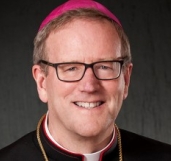
Rev Dr Chris Benek is pastor of First Presbyterian Church, Ft Lauderdale, Florida and chair of the Christian Transhumanist Association, whose goal is "to actively pursue the development and utilization of human technology so as to participate in Jesus Christ's redeeming purposes in the world".
He tells Christian Today: "While Mr Itskov's motivations may not be particularly spiritually driven I don't think that Christians necessarily need to reject what he is attempting to do. Instead I think that we should show support in a way that exudes Jesus."
Benek says humanity is "called to participate in Christ's redemptive purposes in the world". "That participation necessarily includes using technology to advance and better the human condition as God leads," he says.
"Death is an enemy of humanity – the Scriptures are clear about this. Christ allows us to overcome our limitations in correlation with our belief to advance ourselves towards living more fully into the image of God in which we were created."
There are risks, too, among them that we would "seek to usurp God's authority by becoming gods ourselves," Benek says. "This could lead to decisions that are made in isolation and that do not have all of humanity's best interest at heart. Our intentions in making these decisions are just important as the decisions themselves because they determine whether or not the technology in question is designed to be used for good or for evil."
So, he says: "I think that Christians should love and support technologists like Itskov in ways that encourage their efforts to be accomplished for the good of all of humanity in accordance with our collective understanding of Christ's teachings."
So could Itskov's technological fix for mortality be a spiritual positive? It's undeniably fascinating – but undeniably troubling, too, raising all sorts of theological questions. Death is usually unwelcome, but is it so very terrible that life has a limit? What does the prospect of a sort of eternity on earth say about the Christian's hope of heaven? How would it change how we live now, if we knew that our threescore years and ten were to be multiplied many times over?
And would we have crossed a spiritual line? After all, the Christian witness to immortality is that it's not something to be seized by human beings. In the Genesis story of the Garden of Eden, Adam and Eve are driven out not because they disobeyed God and ate of the tree of the knowledge of good and evil, but because "He must not be allowed to reach out his hand and take also from the tree of life and eat, and live for ever" (Genesis 3:22). While immortality in the New Testament is not just ever-extended life, it's still seen as fundamentally a gift of God.
Furthermore, if the project succeeds – and it's a very big if – it raises the prospect of virtual immortality for the wealthy few, while the rest of us are denied it. It's hard to imagine a technology more socially divisive.
What is clear is that this is the kind of research that has the potential to disrupt many of the ways we've traditionally thought about human beings, our lives and our deaths. And we're only at the beginning.
Follow Mark Woods on Twitter: @RevMarkWoods