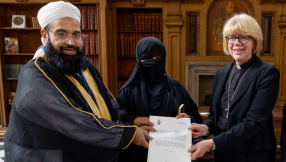
Conservative MPs and peers have written to the incoming Archbishop of Canterbury, Sarah Mullally, urging her to abandon plans to pay £100 million in slavery reparations.
The parliamentarians argue that such a payment would set a bad precedent and could fall foul of Charity Commission rules that require charitable funds be used for the purpose they were donated for.
Mullally is due to be installed as Archbishop of Canterbury in March following a formal Confirmation of Election ceremony at St Paul’s Cathedral in January. Her appointment as the first woman to hold the office since the role was created almost one and a half millennia ago was controversial due to her liberal stance on sexuality and has already alienated conservative Anglicans like those represented by the Gafcon movement.
Now Mullally is facing pressure to put an end to plans by the Church Commissioners, who are supposed to use their considerable endowment to support local parishes and clergy, to us £100 million on reparations.
A spokesperson for the Church Commissioners told The Times, “The Church Commissioners, as a 320-year-old Christian in-perpetuity endowment fund, has committed £100 million to set up a new investment fund to support healing, justice and repair, in response to the discovery of its historic links with Transatlantic African chattel enslavement.
“This is consistent with the Church of England’s Fourth Mark of Mission: to ‘seek to transform unjust structures of society, to challenge violence of every kind and pursue peace and reconciliation’. Governance arrangements are being developed transparently — in line with charity law, our fiduciary duties, and our moral purpose — to ensure proper oversight and accountability.”
Shadow Home Office minister, Katie Lam, disagrees and has written to Mullally calling on her to drop the plans.
The letter, which was signed by 27 senior Conservatives, says that the Church Commissioner fund should be used to strengthen local parishes and not for “high-profile and legally dubious vanity projects”, reports The Sunday Times.
The letter also states that Charity Commission rules require charitable funds be used for the purpose for which they were donated.
“By law, the endowment must be used to support parish ministry, maintain church buildings, and care for the Church’s historic records," the letter reads.
"At a moment when churches across the country are struggling to keep their doors open — many even falling into disrepair — it’s wrong to try and justify diverting £100 million to a project entirely separate from those core obligations.”
It has been reported that the Church Commissioners will create a new charity and transfer the £100 million as an ex-gratia payment. The Church has reportedly held informal talks with the Charity Commission about the plan. Lam also organised a letter to the Charity Commission outlining her opposition.
In the letter to Mullally, Lam and other Conservatives warned about the precedent of paying reparations: “If a major national institution redefines its charitable purposes to embrace political projects of this kind, it will put pressure on every other historic institution — universities, museums, galleries, even the Crown — to follow suit, regardless of their legal objects or donors’ intentions.”