Catholic bishops in Scotland have raised serious concerns about freedom of expression and religion following the first criminal charge under the country’s recently introduced abortion clinic buffer zone legislation.
The intervention comes after a 75-year-old Christian Glasgow grandmother Rose Docherty became the first person to face prosecution under the Abortion Services (Safe Access Zones) (Scotland) Act 2024. The legislation creates exclusion zones within a 200-meter radius around abortion facilities and restricts behaviour considered capable of “influencing” others on abortion.
The Catholic Bishops’ Conference of Scotland said the case marked a deeply “troubling” moment for civil liberties in modern Scotland, warning that the law’s scope and vagueness could place ordinary expressions of belief — including silent prayer — at risk of criminal sanction.
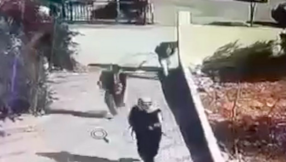
Ms Docherty was arrested last year after standing near the Queen Elizabeth University Hospital holding a sign that said “Coercion is a crime, here to talk, only if you want”.
She did not approach anyone or reference abortion directly, according to Alliance Defending Freedom (ADF) International, which is supporting her in her case.
Authorities accuse Ms Docherty of committing two acts of “influencing” inside a designated buffer zone.
She said after her first court hearing before Christmas: “I can’t believe I am here today. I simply stood, in love and compassion, offering consensual conversation to anyone who wanted to engage. Nobody should be criminalised just for offering a chat.”
Her next court hearing is scheduled for January 13.
The buffer zone legislation, introduced following years of debate, applies to around 30 abortion facilities across Scotland.
Within these areas, behaviour that could be interpreted as influencing — whether through speech, signs or presence — may constitute a criminal offence.
Supporters of the law argue it is necessary to protect women accessing abortion services from harassment or intimidation.
However, in their statement, the bishops have stressed that the Catholic Church does not support harassment and believes existing laws already provides sufficient means to address threatening or obstructive behaviour.
The bishops also pointed to evidence submitted during the Bill’s passage through the Scottish Parliament in which Police Scotland indicated that current legal frameworks were adequate to deal with public order concerns near abortion facilities and that no additional offences were required.
The bishop argue that introducing new criminal sanctions where existing law is sufficient represents a “disproportionate and undemocratic” expansion of state power and sets a concerning precedent.
One of the most contentious aspects of the Act is its potential reach beyond public demonstrations.
Official guidance accompanying the legislation acknowledges that activities such as “praying audibly” or holding “silent vigils” could fall within its scope if deemed to be influencing.
The law also applies to residential homes located within buffer zones.
Gillian Mackay, the Scottish Green MSP who introduced the Bill, previously told BBC Scotland that praying in a manner observable from a window could constitute an offence “depending on who’s passing the window”.
The Catholic bishops say this creates a legal standard based on subjective perception rather than clear conduct, something they warn is incompatible with fundamental freedoms.
Senior police figures also expressed unease during the legislative process.
Superintendent Gerry Corrigan told MSPs that policing people’s thoughts or intentions was an area officers would “stay clear of”, adding that asking individuals what they were thinking would be “really uncomfortable”.
Ms Docherty’s arrest attracted international attention after footage circulated widely online.
The US Department of State released a statement expressing concern, describing the case as an example of growing restrictions on free speech in Europe.
The issue was also referenced in February last year by JD Vance during a speech at the Munich Security Conference, where he highlighted Scotland’s buffer zone law as a case raising serious questions about human rights.
ADF International said prosecutors have since withdrawn what it termed “disproportionate” bail conditions that initially barred Docherty from a wide area of Glasgow.
The Catholic Church’s parliamentary officer warned that women facing crisis pregnancies could be deprived of opportunities to seek support from individuals or organisations offering alternatives to abortion, arguing that the law risks narrowing — rather than protecting — choice.
In their statement, the bishops said: “It cannot be a crime to give our voice and our prayers to the unborn … Every human life has infinite dignity from its beginning. That truth is not confined to private thoughts.
“A society confident in its values does not fear opposing voices. It does not criminalise silent prayer. It does not ask its police or judges to peer into the minds of its citizens.
“Scotland’s buffer zones law represents a profound shift in the relationship between the State and the individual — one that restricts free speech, free expression and freedom of religion in ways that should concern us all.”
They also noted that amendments aimed at narrowing the law’s reach — including exemptions for chaplains and a reasonableness defence — were rejected during parliamentary proceedings.
While similar buffer zone laws have been introduced in England and Wales, the Scottish case has intensified scrutiny of how such legislation is enforced and interpreted in practice.
As Ms Docherty’s case proceeds, the bishops say it will serve as a test of whether Scotland’s commitment to freedom of conscience, expression and religion can coexist with laws that criminalise conduct based on perceived influence rather than demonstrable harm.
“It is a shame that the State has now also curtailed the voices of ordinary citizens who advocate for them within its borders,” the bishops concluded in their statement.