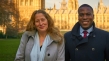
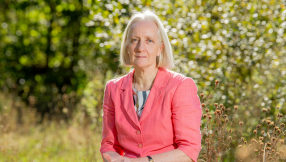
Christians should be confident and unapologetic in speaking about their faith in 'a hostile and increasingly secular world', the new bishop of London, Sarah Mullally, has said.
Bishop Mullally was installed as the first female bishop of London at St Paul's Cathedral on Saturday. Her meteoric rise means she is now the third most senior cleric in the Church of England, after the archbishops of Canterbury and York. She will take up her automatic place within the House of Lords later this month.
She confessed Christians often find it 'very hard to talk openly about faith' in an interview with The Observer.
'You have to have confidence and not be apologetic – and that's quite hard in what is a hostile and increasingly secular world. But if you are confident and respectful, people are interested. What they find difficult is if they think you're being directional to them,' she told the paper.
Mullally's background is in the NHS where she rose to be the youngest chief nursing officer aged 37 before part-time training for the priesthood.
'There aren't many bishops who come from comprehensive schools, who are poly [polytechnic] girls and who did [part-time training] for the priesthood,' she said in an interview with The Observer.
'It's not just gender, it's also your background that's equally important. Some of these things are changing. Leadership in the church needs to reflect the communities we serve. There is work to do about how we encourage vocations from people who may be working-class, people who've not had a traditional straightforward academic pathway, people from BAME [black, Asian and minority ethnic] groups. The system may need to be different.'
Since her appointment Mullally has tried to reach out to the many conservative congregations in London who oppose female ordinations. However she will be present at ordinations of traditionalists, who do not recognise her ministry, in a break from her predecessor Richard Chartres who delegated all ordinations to his junior bishops to appease opponents of female ordination.
In her sermon, the bishop preached on the theme of 'being subversive for Christ', and noted that 150 years ago this week, suffragettes placed a bomb underneath the same seat upon which she had been enthroned as Bishop of London.
'While I haven't spoken to everyone – and a lot of people may have chosen not to speak to me – I have been encouraged about how it's gone; they've been very generous,' Mullally said of her meetings with conservatives.
'Someone at a school asked me if a refusal to accept my ministry was perpetuating inequality. My answer is, there is a tension; to deny that would be wrong. My challenge [to traditionalists] is to ask: how are you encouraging women in your church, how are you making sure you're not discriminating against them? But I respect those who can't accept my position, and we will make provision for those who for theological reasons do not want to be ordained by me because I am a woman.'