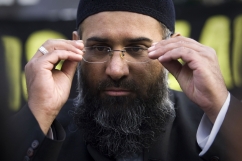
The conviction of Anjem Choudary is proof the government's counter-extremism plans are unnecessary, according to free speech campaigners who have labelled the proposals as "dangerous".
The Defend Free Speech coalition unites the normally polarised The Christian Institute and The National Secular Society to oppose home office policy targeting non-violent extremism. The campaign warn the proposals will target legitimate people who have not broken the law.
Simon Calvert, campaign director of Defend Free Speech and deputy director of The Christian Institute, said the successful conviction of hate preacher Choudary proves the government already has legislation to prosecute extremists.
Calvert said: "But what this case does not demonstrate is why the Government needs yet another law, which will be so widely drawn as to potentially criminalise many ordinary people who hold traditional or strong views.
"As we have already highlighted, this could include pro and anti-religious groups, trade unionists and environmental campaigners. Indeed we have already seen police urging teachers to report on parents who go to anti-fracking protests."
Choudary was watched by counter-terrorism for almost 20 years staying "just within the law" before he was finally arrested in 2014. He was convicted of inviting support for ISIS and will be sentenced to up to 10 years in jail on September 5.
David Anderson QC, a legal expert and the government's independent reviewer of terrorism legislation, said the length of time it took to arrest Choudary showed there was "room for improvement" in the UK's counter-terror laws.
He said the law had "barely touched" Choudary for years.
"We do need to look at what might be done if there are impediments, technical reasons why it's not as easy to get convictions under these laws as it should be."
He told BBC Radio 4 it was "very difficult to craft a law that can clearly distinguish people who are dangerous from people who are simply revolting".
He added: "If you go back 10 or 12 years you had home secretaries saying the criminal justice system is broken, it couldn't deal with terrorism.
"I think we've shown now that that is wrong but of course there is room for improvement."
The government is committed to introducing Extremist Disruption Orders (EDOs) which will clampdown on extreme or hateful speech. Former Chancellor George Osborne said they would "eliminate extremism in all its forms".
He added EDOs would target "harmful activities of extremist individuals who spread hate but do not break laws".
But the Defend Free Speech campaign said the failure to define what constitutes extremism shows means the suggestions are dangerous.
Calvert concluded: "Day by day, the Government's argument for a draconian and invasive law unravels. The complete absence of safeguards, the lack of a clear definition of what is deemed to be extreme, and a plethora of legislation that can already be used against those inciting hatred, promoting violence or encouraging terrorism make the case for ditching this policy all together."