
Ailing Cuban leader Fidel Castro said on Tuesday that he will not return to lead the country as president or commander-in-chief, retiring as head of state 49 years after he seized power in an armed revolution.
Castro, 81, said in a statement to the country that he would not seek a new presidential term when the National Assembly meets on February 24.
"To my dear compatriots, who gave me the immense honour in recent days of electing me a member of parliament ... I communicate to you that I will not aspire to or accept -- I repeat not aspire to or accept - the positions of President of Council of State and Commander in Chief," Castro said in the statement published on the Web site of the Communist Party's Granma newspaper.
The National Assembly or legislature is expected to nominate his brother and designated successor Raul Castro, 76, as president in place of Castro, who has not appeared in public for almost 19 months after being stricken by an undisclosed illness.
The title of "Comandante en Jefe" or commander-in-chief, was created for him in 1958 as the leader of a guerrilla movement that swept down from the mountains of eastern Cuba to overthrow U.S.-backed dictator Fulgencio Batista.
Castro's retirement draws the curtain on a political career that spanned the Cold War and survived U.S. enmity, CIA assassination attempts and the demise of Soviet Communism.
A charismatic leader famous for his long speeches delivered in his green military fatigues, Castro is admired in the Third World for standing up to the United States but considered by his opponents a tyrant who suppressed freedom.
His illness and departure from Cuba's helm have raised doubts about the future of the Western Hemisphere's only communist state.
"Fortunately, our Revolution can still count on cadres from the old guard and others who were very young in the early stages of the process," Castro said in his statement.
"They have the authority and the experience to guarantee the replacement," he said.
The bearded leader who took power in an armed uprising against a U.S.-backed dictator in 1959 had temporarily ceded power to his younger brother after he underwent emergency surgery to stop intestinal bleeding in mid-2006.
Castro has only been seen in pictures since then, looking gaunt and frail, though his health improved enough a year ago to allow him to keep in the public mind writing reams of articles published by Cuba's state press.
"This is not my farewell to you. My only wish is to fight as a soldier in the battle of ideas. I shall continue to write under the heading of 'Reflections by comrade Fidel.' It will be just another weapon you can count on. Perhaps my voice will be heard. I shall be careful," Castro said.
Castro could remain politically influential as first secretary of the ruling Communist Party and elder statesman.
Raul Castro, Cuba's long-standing defence minister, has run the country since July 31, 2006 as acting president. He has raised expectations of economic reforms to improve the daily lot of Cubans, but has yet to deliver.




-

The dire American political situation: a brief overview for faithful Christians in Britain
-

Conversion therapy ban supporters want prayer to be criminalised - this must not be allowed
-

Why the US election results do not bode well for America
-

Police appeal for witnesses after head smashed off Jesus statue at church war memorial
-

Are we seeing the end of Western civilisation?
-

Archaeologists may have discovered identity of mystery skeleton in Westminster Abbey
Most Popular
News
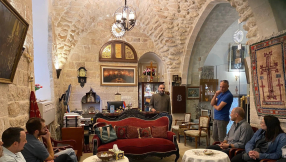
‘Major achievement’ hailed as Israeli officials step in to stop anti-Christian harassment
Harassment against Christian is sometimes justified by appeals to the Jewish religion.

What do Christian young women and men need to know about the opposite sex and themselves?
The first thing that Christian young women and men need to know is that the Bible is the operating manual for humans.
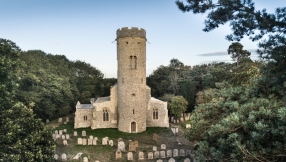
Saxon church saved from Historic England’s ‘at risk’ register after extensive repairs
Historic England has added 197 sites to its Heritage at Risk Register. However it has also managed to save dozens of buildings, including a 1,000-year-old church.
Trump’s midterm defeat and its implications for Christians on both sides of the Atlantic
America’s power and influence on the world stage, combined with Trump’s unpredictability and volatility, is a worrying mix.





