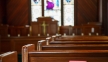
The Association of English Cathedrals has declared glasswork in Carlisle Cathedral “The Nation’s Favourite Stained Glass Window”.
Specifically, the winner is the Curvilinear East Window of Carlisle Cathedral. The window depicts scenes from the life of Jesus and the last judgement, and dates back to the late 13th and 14th centuries.
Work began on the windows in 1292 as part of a broader reconstruction effort following a fire. However, rebuilding went slowly thanks to regular raids and attacks by the Scots and the devastation caused by the Black Death.
In 1314 Edward Bruce - brother of the more famous Robert the Bruce - exploited the recent Scottish victory at Bannockburn by occupying the area around Carlisle for three days, causing significant economic disruption. The following year, Robert the Bruce himself besieged the city, plundering the local area for supplies. The siege was later abandoned.
In 1349 the Black Death came to Carlisle, claiming the lives of around a third of the city’s population.
It was only following these disasters that real progress could be made on the windows. In 1359, local yeoman John de Salkeld donated 40 shillings “to make a window anew in the chancel”. The upper section of the window, depicting the last judgement, dates from this time and is believed to be the work of Ivo de Raughton.
The lower portions of the window were lost at some point prior to the mid-18th century. In the 19th century Hardman & Co. of Birmingham were commissioned to create the lower sections of the window in honour of the late Hugh Percy, Bishop of Carlisle. It is this more recent work that depicts scenes from Jesus’ life.
The oldest surviving examples of stained glass windows in Britain are believed to date to the mid 12th century and were commissioned following the murder of Thomas Becket.
The French Abbé Suger, who died in 1151, argued that when light entered a church via stained glass, it became a divine light that represented God’s presence on earth. He would go on to design the church of Saint-Denis as a “temple of light”, marking the transition from Romanesque to Gothic architecture.