Britain must use all of its "diplomatic muscle and energy, stringent economic sanctions, and focused political will" to force Russia to end its aggression in Ukraine, the Archbishop of York has said.
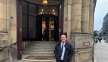
Archbishop Stephen Cottrell addressed the House of Lords in a debate on the situation in Ukraine on Friday.
In his speech, the Archbishop repeated comments he made jointly with the Archbishop of Canterbury in which they called the unprovoked attack on Ukraine "an act of great evil".
"This is a dark hour for Europe," Cottrell told peers.
He said that events in Ukraine had been "truly shocking" and expressed his regret that "Ukraine now stands alone, unprotected by the treaties that protect us".
"Perhaps in the West, we have taken peace for granted. The horrors being visited on Ukraine must be a wake-up call for us that peace is something you need to work at," he said.
He continued, "Peace is a choice. It is a decision that we need to make each day about the way we live and about our responsibilities to and with our neighbour, be that in our family, in our local community, or between the nations of the world. And we need the policies, the wisdom, the tenacity and the international resolve that will deliver it."
The Archbishop went on to call for "generous" humanitarian aid and support for refugees, and urged Britain to continue pursuing a diplomatic solution to the crisis.
"Our actions must be swift and cohesive if they are to be decisive," he said.
"The suffering of Ukraine, the imperialist ambition of Russia, our own acceptance that 'immoral flood of corrupt money that flows (from Russia) through London' has to stop."